
TL;DR:
- Alluvial gold forms in river sediments through gravity sorting and concentrates in specific zones.
- Recognizing geological indicators like black sands and river bend features improves prospecting success.
- Successful prospecting relies on regional knowledge, legal compliance, and effective gravity recovery methods.
Most prospectors assume gold only hides in hard rock veins deep underground. That assumption costs real time and real money. The truth is that some of Australia's most productive gold finds come from loose river sediments sitting right at the surface. Alluvial gold has shaped the country's mining history, from the Victorian goldfields to the rivers of New South Wales. Understanding how it forms, where it concentrates, and how to recover it efficiently is the difference between a productive day in the field and going home empty-handed. This guide covers formation, field indicators, detection techniques, regulations, and the tools that give modern prospectors a genuine edge.
Table of Contents
- What is alluvial gold and how does it form?
- Where to find alluvial gold: Geological clues and indicators
- Detection methods and extraction techniques for alluvial gold
- Australian regulations and best practices for alluvial gold prospectors
- Why successful alluvial gold prospecting depends on local knowledge
- Enhance your prospecting with DIGMATE
- Frequently asked questions
Key Takeaways
| Point | Details |
|---|---|
| Understand alluvial gold | Gold can be found in loose river sediments, not just in rocks, making rivers prime targets for prospecting. |
| Spot key indicators | Black sands and specific geologic features signal where alluvial gold is likely to accumulate. |
| Choose optimal tools | Combine gravity-based recovery methods with modern equipment for efficient extraction. |
| Respect regulations | Follow Australian legal guidelines and best practices for sustainable, responsible mining. |
| Leverage local expertise | Local knowledge outpaces generic methods—tap into regional networks for more successful prospecting. |
What is alluvial gold and how does it form?
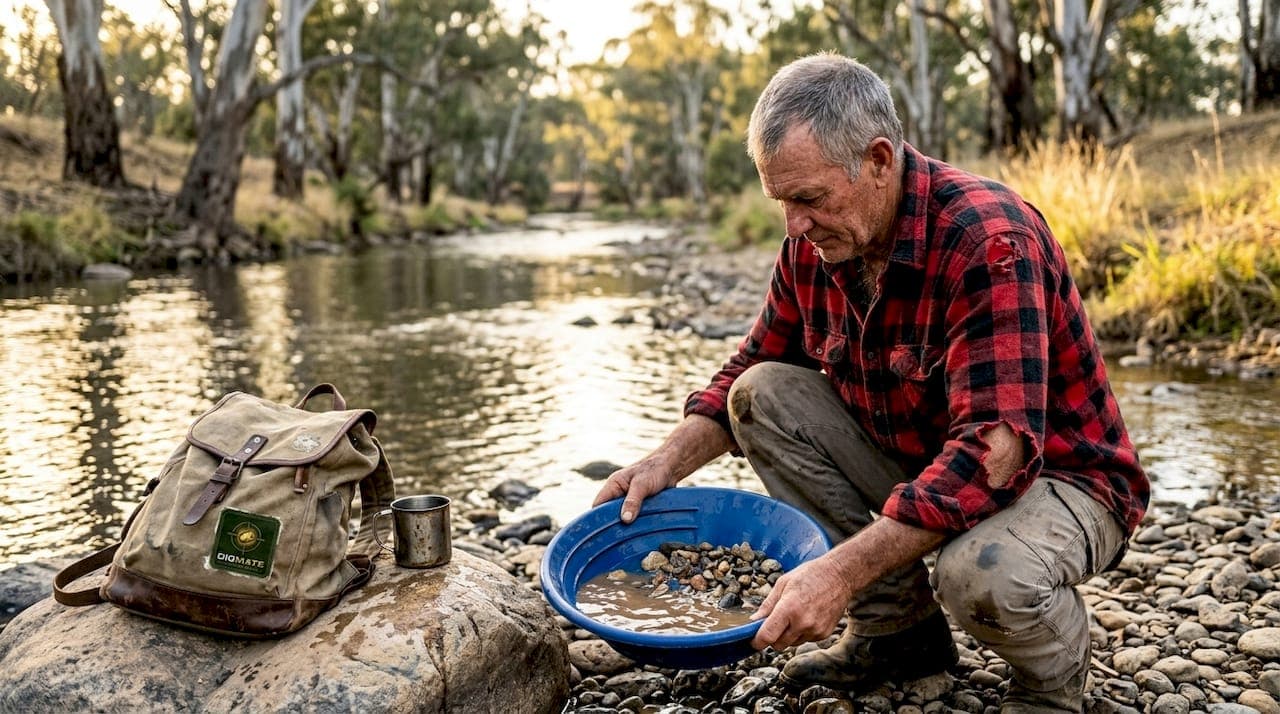
Alluvial gold is not a different type of gold. It is the same metal, just found in a completely different setting. Placer gold deposits form in river or stream sediments through gravity separation of dense gold particles from weathered source rocks. Over thousands of years, primary gold veins erode, releasing particles that water carries downstream. Gravity does the sorting work, pulling heavy gold down while lighter material washes away.
What makes gold ideal for alluvial concentration is its physical profile. Gold has a specific gravity above 19.3 g/cm³, far denser than quartz at 2.65 or most common sediment minerals. It also resists chemical weathering almost completely, meaning it survives long transport distances without breaking down. These two properties explain why gold accumulates in predictable zones rather than spreading randomly.
Gold does not travel far from its source without concentrating. Every bend, every boulder, every bedrock crack is a potential trap.
In Australian rivers, alluvial gold concentrates in specific locations:
- Inside river bends, where water velocity drops and heavy particles settle
- Behind large boulders, which create low-pressure zones that catch dense material
- At bedrock contacts, where gold sinks through loose gravel and rests on solid rock
- In ancient paleochannels, buried riverbeds from prehistoric drainage systems
Australia's major goldfields, including Ballarat and Bendigo in Victoria and Bathurst in New South Wales, were built on alluvial discoveries. The rivers feeding these regions still carry gold today. Understanding geodata for prospecting helps you map these ancient drainage systems and identify where productive zones are most likely to exist. Pairing geological knowledge with metal detector prospecting gives you a layered approach that beats guesswork every time.
Where to find alluvial gold: Geological clues and indicators
Knowing what alluvial gold is only gets you so far. The real skill is reading a riverbed and knowing where to focus your effort. The geology tells a story, and experienced prospectors learn to read it fast.
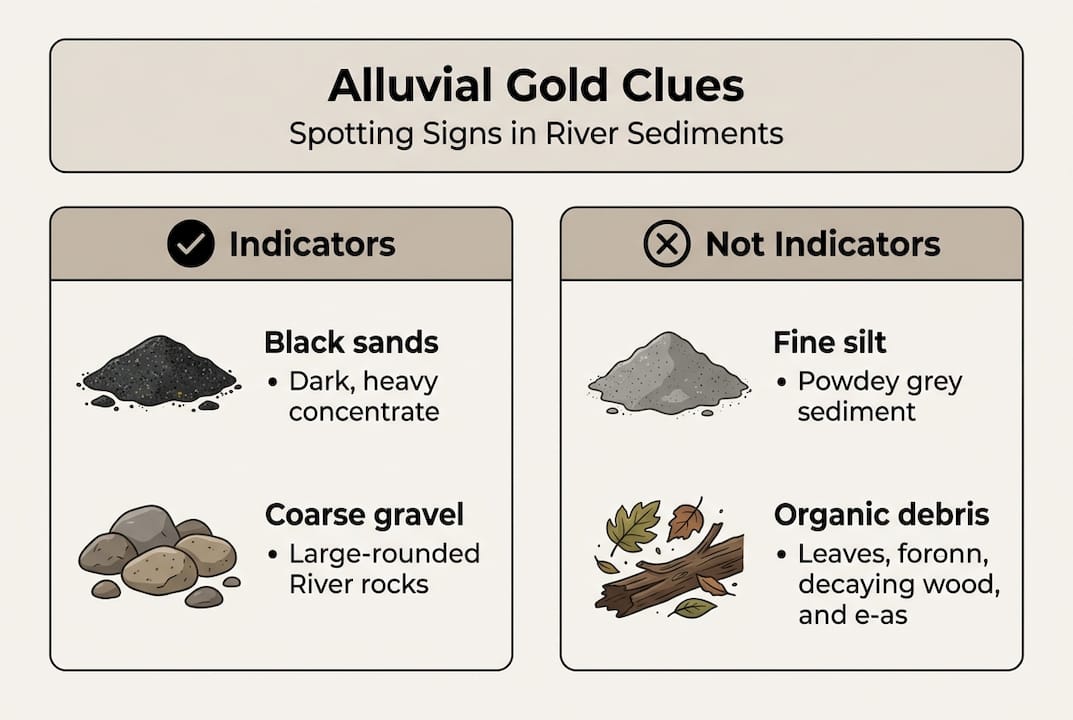
The most reliable physical indicator is black sands, which are concentrations of magnetite and hematite. Gold and these heavy minerals share similar density and weathering resistance, so they travel and settle together. Where you find black sands, gold is often nearby. This is not coincidence. It is the result of the same gravity sorting process that concentrates magnetite and hematite alongside gold particles.
Other geological clues include:
- Coarse gravel layers sitting above fine clay or silt, which act as natural riffles
- Exposed bedrock crevices filled with packed sediment, classic gold traps
- Color changes in sediment, particularly rusty orange or red oxidized zones near iron minerals
- Ancient terrace gravels sitting above the current waterline, remnants of higher river levels
Here is a quick comparison to help you prioritize field observations:
| Feature | Gold indicator | Not an indicator |
|---|---|---|
| Black sands present | Strong yes | Absent |
| Fine white sand | Unlikely | Typical non-indicator |
| Coarse gravel on bedrock | Strong yes | Deep clay layers |
| Inside river bend | Strong yes | Straight fast channel |
| Behind large boulder | Strong yes | Open flat riverbed |
| Quartz veins nearby | Possible source | Far from any vein |
Pro Tip: Focus your sampling on zones where water velocity visibly drops. Waterfalls, sharp bends, and channel constrictions all force water to slow and dump its heaviest load. That load often includes gold. Use gold prospecting techniques to systematically work these zones rather than sampling randomly across a wide area.
Detection methods and extraction techniques for alluvial gold
Once you have identified a promising zone, the next question is how to get the gold out efficiently. The method you choose depends on the volume of material you are processing and the type of sediment you are working with.
Here is a ranked sequence from basic to advanced:
- Gold panning: The entry point for every prospector. Cheap, portable, and effective for testing a site. Slow for large volumes but unbeatable for reading a new location.
- Rocker box: Speeds up the panning process by processing larger volumes of gravel with a rocking motion. Good for small-scale operations on gravel-rich creeks.
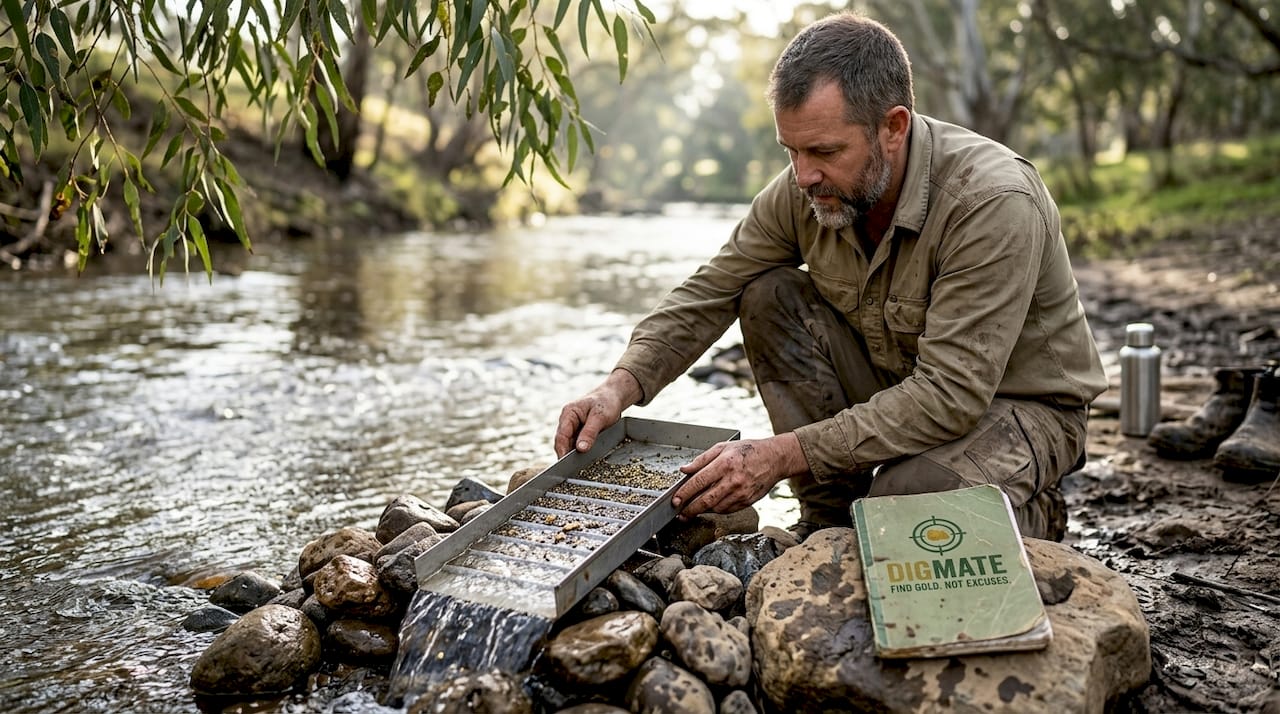
- Sluice box: A channel with riffles that captures gold as water washes material through. Efficient for continuous processing along active streams.
- Highbanker: A pump-fed sluice that lets you work away from the water source. Ideal for dry gullies or elevated terrace gravels.
- Centrifugal concentrator: Modern equipment that uses spinning force to separate heavy minerals from fine material. Excellent for recovering fine gold that sluices miss.
- Wash plant: Large-scale gravity-based systems combining screening, sluicing, and concentration. Used by commercial operations processing hundreds of tons per day.
Gravity-based recovery methods including panning, sluice boxes, rocker boxes, highbankers, dredging, and gravel pump mining remain the backbone of alluvial gold recovery. Modern centrifugal concentrators and wash plants have significantly improved fine gold recovery rates for larger operations.
| Method | Best sediment type | Scale | Fine gold recovery |
|---|---|---|---|
| Panning | All types | Individual | Moderate |
| Sluice box | Gravel, sand | Small to medium | Good |
| Highbanker | Gravel, dry material | Small to medium | Good |
| Centrifugal concentrator | Fine material | Medium to large | Excellent |
| Wash plant | Mixed gravel and clay | Large commercial | Excellent |
Pro Tip: Clay-rich sediments are notoriously difficult. Clay coats gold particles and prevents them from settling properly in a sluice. Break up clay-rich material with water jets before feeding it through any gravity recovery system. This single step can dramatically improve your recovery rate. If you are evaluating equipment options, check detection tools alternatives to compare platforms that help you plan and log your field sessions alongside your physical gear.
Australian regulations and best practices for alluvial gold prospectors
The excitement of finding a productive site can make it tempting to start digging immediately. That is a mistake. Australia has a structured legal framework for alluvial gold prospecting, and operating outside it carries serious consequences.
Key compliance requirements include:
- Miner's right or fossicking license: Required in most states before any ground disturbance. In Victoria and New South Wales, these are available through state government portals.
- Exploration license or mining lease: Needed for any commercial-scale operation beyond recreational fossicking limits.
- Crown land permissions: Many productive alluvial zones sit on Crown land. Specific permits are required, and some areas are completely off-limits.
- National park and reserve restrictions: Prospecting is prohibited in most protected areas. Always check current zoning maps before traveling to a site.
- Water use permits: Highbankers and dredges that divert or pump water may require additional water authority approvals depending on state.
Responsible extraction is not just a legal requirement. It protects the resource for future prospectors. Modern wash plants and centrifugal concentrators have improved recovery efficiency, but responsible mining must follow legal protocols to protect riverbeds and aquatic habitats.
Best practice in the field means backfilling any holes you dig, avoiding disturbance to riverbanks beyond what is necessary, and removing all equipment and waste from the site. Prospectors who operate responsibly protect access rights for the whole community.
For environmental context, check environmental best practices specific to New South Wales and Victoria to stay current with regional requirements. Regulations change, and staying informed is part of the job.
Why successful alluvial gold prospecting depends on local knowledge
Here is an uncomfortable truth most prospecting guides skip: generic methods produce generic results. You can follow every textbook recommendation perfectly and still come home with nothing if you do not understand the specific geology of the region you are working.
Australia's geology varies dramatically from region to region. The alluvial systems feeding the Victorian goldfields behave differently from the ancient buried channels of New South Wales. A technique that works brilliantly on a shallow gravel creek near Castlemaine may be completely wrong for a deep clay-rich channel in the Lachlan River system.
Field observation beats classroom knowledge every single time. The prospectors who consistently find gold are the ones who have spent years reading specific rivers, tracking seasonal changes, and building mental maps of where gold actually shows up versus where theory says it should be. Historical records, old mining reports, and conversations with experienced local prospectors are worth more than any generic guide. Tap into regional prospecting networks and clubs. The local gem prospecting tips shared in those communities reflect decades of site-specific experience that no textbook captures.
Enhance your prospecting with DIGMATE
Understanding alluvial gold formation, field indicators, and recovery methods gives you a strong foundation. Applying that knowledge effectively in the field is where the real challenge begins.

DIGMATE bridges the gap between geological knowledge and on-the-ground results. The platform combines AI-driven analysis, geospatial mapping, and mineral detection tools built specifically for prospectors working in New South Wales and Victoria. Instead of relying on outdated paper maps or general-purpose apps, you get location-specific data that helps you identify productive zones before you drive hours to a site. Whether you are planning your first alluvial outing or scaling up a commercial operation, DIGMATE gives you the intelligence to work smarter and recover more.
Frequently asked questions
What makes alluvial gold deposits different from hard rock gold?
Alluvial gold is found in loose sediments of rivers and streams, separated by water action over time, unlike hard rock gold which is trapped inside veins within solid rock formations.
Which physical signs suggest the presence of alluvial gold?
Look for black sands (magnetite and hematite), coarse gravel layers, and heavy mineral concentrations in areas where water slows, such as inside river bends or behind large boulders.
What are the most effective techniques for recovering alluvial gold?
Gravity-based methods like panning and sluicing are the most accessible, while centrifugal concentrators and wash plants offer significantly higher efficiency for processing larger volumes of material.
Are there legal restrictions on prospecting for alluvial gold in Australia?
Yes, prospectors must obtain the appropriate license or miner's right and follow state environmental regulations. Responsible mining protocols are mandatory, and operating without permits can result in significant fines.