
TL;DR:
- Mastering core geology terms enhances prospecting success and prevents costly mistakes.
- Understanding concepts like lode, ore, gangue, and assay is crucial for evaluating sites accurately.
- Combining geological vocabulary with local knowledge and modern tools improves field decision-making.
Geology jargon trips up more prospectors than bad weather or poor equipment ever will. You can have the right detector, the right ground, and still walk away empty-handed because you misread a field report or misunderstood what a fellow prospector meant by "lode" versus "vein." This guide is built specifically for individual prospectors and small-scale operators working across New South Wales and Victoria. We'll break down the terms that matter most, show you how to use them at real sites, and help you avoid the costly mistakes that come from guessing at definitions. Better vocabulary means better decisions in the field.
Table of Contents
- Why geology terms matter for prospectors
- The essential geology glossary for prospectors
- Making sense of geology in the field
- Common mistakes and advanced tips
- A prospector's perspective: What most guides miss about geology terms
- Where to get more geology help and smarter tools
- Frequently asked questions
Key Takeaways
| Point | Details |
|---|---|
| Know the basics | Core terms like adit, assay, lode, and grade are non-negotiable for prospectors in NSW and Victoria. |
| Apply knowledge in the field | True mastery comes from using correct geology terms to read landscapes, not just memorizing definitions. |
| Avoid common errors | Misidentifying ore and gangue wastes time—reference your glossary and test material carefully. |
| Stay current | Geology terminology and best practices change, so keep updating your field glossary and consult local experts. |
Why geology terms matter for prospectors
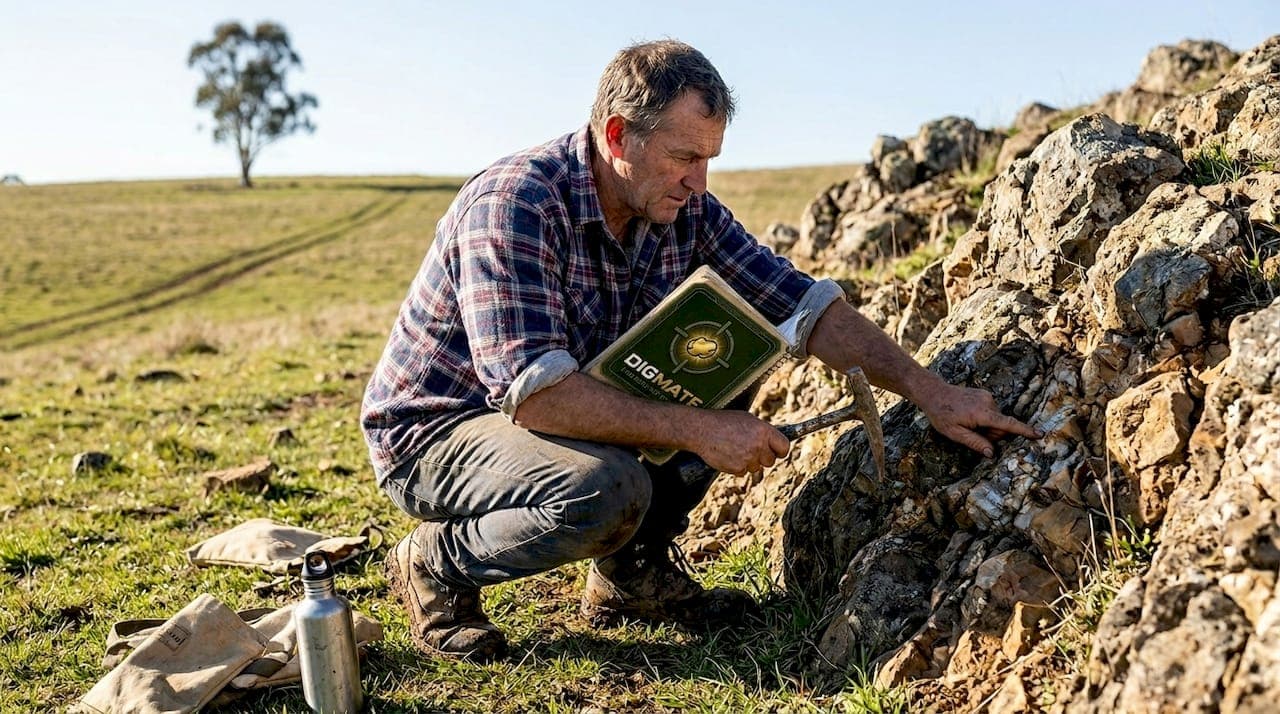
Most new prospectors underestimate how much language shapes their results. You might be standing on a productive site and not recognize it because you don't know what an outcrop is telling you, or you confuse a gangue-heavy zone for a promising ore body. That confusion costs time, fuel, and energy. The right vocabulary is not just academic. It's a practical field tool.
Knowing even ten core geology terms gives you a measurable advantage. You can read old government reports with confidence, communicate clearly with other prospectors, and evaluate a site before you ever break ground. Terms like "lode," "grade," and "assay" directly inform where you dig and what you keep. A lode is a metal-bearing vein or zone. Grade tells you how much valuable mineral is present per unit of rock. Assay is the test you run to confirm what's actually there. These three terms alone can shape your entire field strategy.
One of the most important distinctions you'll learn is the difference between ore and gangue. Ore is the rock or mineral material worth extracting because it contains valuable minerals at an economic concentration. Gangue is the worthless material mixed in with the ore. It looks similar, it comes from the same ground, and it will fool you if you're not paying attention. Misidentifying gangue as ore is one of the most common and expensive mistakes in small-scale prospecting.
Here are the core terms you should know before your next field trip:
- Adit: A horizontal tunnel driven into a hillside to access a mineral deposit
- Assay: A chemical test that determines the concentration of valuable minerals in a rock sample
- Gangue: The non-valuable minerals surrounding or mixed with ore
- Grade: The concentration of valuable mineral in a given volume of rock
- Lode: A continuous metal-bearing vein or zone within host rock
- Ore: Rock containing valuable minerals at an economically recoverable concentration
- Outcrop: A visible exposure of bedrock at the surface
- Seam: A thin layer or stratum of mineral material
- Vein: A sheet-like body of minerals filling a fracture in rock
As one mining terminology resource notes, essential geology terms for prospectors include key concepts such as adit, assay, gangue, grade, lode, ore, outcrop, seam, and vein. These aren't abstract definitions. They're the building blocks of smart site evaluation.
"The right vocabulary prevents costly mistakes. Prospectors who understand what they're reading in field reports and on old maps consistently outperform those who guess." — Mining industry best practice
Following prospecting best practices means treating geology literacy as a core skill, not an optional extra. And understanding geology's role in gold finding across NSW and Victoria puts all these terms into a real-world context you can act on.
The essential geology glossary for prospectors
Now that you know the value of these terms, here's a focused glossary you can actually use in the field.
| Term | Plain definition | Field example |
|---|---|---|
| Adit | Horizontal tunnel into a hillside | Old adits in Ballarat often indicate nearby lode systems worth investigating |
| Assay | Chemical test for mineral concentration | Send a sample for assay before committing to a full dig |
| Gangue | Worthless rock mixed with ore | Quartz gangue is common in Victorian goldfields |
| Grade | Amount of valuable mineral per tonne | Low-grade zones may not justify the effort for small operators |
| Lode | Continuous mineral-bearing vein or zone | Many NSW goldfields follow known lode systems |
| Outcrop | Bedrock exposed at the surface | A fresh outcrop after erosion can signal new material |
| Vein | Mineral-filled fracture in host rock | Gold often travels along quartz veins |
| Seam | Thin layer of mineral material | Coal and some gem deposits occur in seams |
Beyond the table, five terms consistently trip up prospectors in the field. Here's a numbered breakdown with practical context:
- Gangue: Most beginners assume anything shiny or heavy is valuable. Gangue can be dense, colorful, and visually convincing. Always test before you get excited.
- Assay: Not just a lab process. Understanding assay results means knowing the difference between parts per million (ppm) and grams per tonne, and what those numbers mean for your effort.
- Grade: A high-grade deposit sounds great, but grade only matters relative to extraction cost. A small high-grade pocket can outperform a large low-grade zone for individual prospectors.
- Vein vs. lode: A vein is a single fracture-fill. A lode is a broader zone that may contain multiple veins. Knowing which you're dealing with changes your search pattern entirely.
- Lode: Historical reports in NSW and Victoria often reference lode systems by name. Recognizing these references helps you cross-reference modern maps with historical finds.
The mining terminology A-Z covers 50-plus terms tailored to the Australian mining context, including prospecting-specific entries like adit, assay, lode, and outcrop. It's worth bookmarking.
Pro Tip: Start a personal field glossary in a notebook or phone app. Add local names, historical terms from old reports, and any variations you hear from experienced prospectors in your area. Language in the goldfields is living history.
For gem hunters, understanding these terms is equally critical. Explore gem prospecting strategies and learn how reading gold prospecting terrain connects geological vocabulary to what you actually see on the ground.
Making sense of geology in the field
Knowing definitions isn't enough. Here's how you use them at actual sites.
One of the most useful distinctions for small-scale operators is understanding brownfield versus greenfield exploration. Both have real value, but they require different approaches.
| Feature | Brownfield exploration | Greenfield exploration |
|---|---|---|
| Definition | Near or within previous mining areas | Completely new, unexplored ground |
| Benefits | Historical data available, known mineralization | Potential for untouched deposits |
| Risks | Worked-over ground, permit complexity | Higher uncertainty, more research needed |
| Best for | Prospectors using old maps and reports | Adventurous operators with strong geology skills |
As noted in mining exploration guides, the brownfield versus greenfield distinction, along with the gangue versus ore separation, is critical for accurate grade assessment in the field.
Here's how geology terms directly influence your real-site decisions:
- Outcrops tell you where bedrock is exposed and accessible. Fresh outcrops after rain or erosion are worth immediate investigation.
- Vein orientation helps you predict where a mineral body continues underground. Follow the dip and strike.
- Grade estimation in the field (before assay) helps you prioritize which samples to send to the lab.
- Seam identification matters for gem prospecting, where material often occurs in distinct layers.
- Gangue recognition saves you from hauling worthless rock out of the field.
Pro Tip: Before committing to labor-intensive digging, use non-destructive testing methods like visual inspection, hand lens examination, and portable XRF scanners to assess rock structure and mineral content. This saves hours and protects the site.
For practical guidance on where to look, check out resources on finding better gold locations and browse the full range of prospecting guides available for NSW and Victoria operators. If you're working creek systems, understanding alluvial gold explained adds another layer of practical vocabulary to your toolkit.
Common mistakes and advanced tips
Once you know how to use these terms, avoid the errors most new prospectors make.
Here are three common pitfalls in geology term usage and what they actually cost you:
- Confusing gangue for ore: You spend hours extracting material that has no economic value. Worse, you might leave a site convinced it's barren when the real ore body is still there, just mixed with misleading gangue.
- Overvaluing low-grade deposits: Grade sounds impressive until you do the math. A large volume of low-grade material can require industrial-scale processing that makes no sense for individual operators.
- Misreading 'vein' as 'lode': A vein is a single feature. A lode is a system. Treating a single vein as a full lode system leads to over-investment in one spot and under-exploration of the surrounding area.
As highlighted in Australian mining terminology resources, essential geology terms are critical for individual prospectors identifying and evaluating deposits accurately.
"Distinguishing ore from barren material can make or break field efforts. The prospectors who succeed long-term are those who test first and dig second."
Two advanced terms worth adding to your vocabulary:
Gossan: The iron-rich, oxidized cap that forms above a sulfide ore body. In NSW and Victoria, gossans are often visible at the surface and can indicate deeper mineralization worth investigating.
Strike: The horizontal direction of a geological feature like a vein or seam. Knowing the strike helps you predict where a deposit continues and where to target your next test pit.
Always confirm definitions with local experts or check current regulations before acting on field interpretations. Terminology can shift between regions and between historical and modern usage. For targeted guidance, review exploration tips for NSW and Victoria and understand why geodata matters when you're combining geology knowledge with modern tools.
A prospector's perspective: What most guides miss about geology terms
Most geology guides hand you a list and call it done. That's useful, but it's not the whole picture. The prospectors who consistently find good ground aren't the ones who memorized the most definitions. They're the ones who can hold a conversation with a 70-year-old local who's been working the same creek for decades, and actually understand what he means by terms that never appear in any official glossary.
Field terminology evolves. Local history shapes vocabulary in ways that no standardized list captures. In parts of Victoria, old-timers use terms borrowed from Welsh and Cornish mining traditions. In NSW, you'll hear references tied to specific historical rushes. A static glossary won't prepare you for that.
The contrarian truth is this: dynamic learning beats passive memorization every time. Re-read old government reports and historical survey documents with fresh eyes after you've built your base vocabulary. You'll catch things you missed before. You'll also notice when terminology has shifted and what that shift means for how a deposit was assessed.
Better site selection strategies come from combining book knowledge with field conversations and historical context. Keep updating your glossary. Keep asking questions. The language of the goldfields is never finished.
Where to get more geology help and smarter tools
Ready to take your geology knowledge into the field with better tools?
DigMate is built for exactly this moment, when you've got the vocabulary and you're ready to act on it. Access a free gold prospecting map covering key areas across NSW and Victoria, built with geospatial data that puts your new geology knowledge to immediate use.

DigMate's platform combines AI-powered analysis with real geological data so you're not guessing at what the ground is telling you. Explore DigMate's AI gold tools to see how the platform interprets terrain, mineralogy, and historical data in one place. For hands-on ground analysis, the DigMate ground scan feature gives you a field-ready layer of intelligence that works alongside everything you've just learned. Smarter vocabulary plus smarter tools equals fewer wasted days in the field.
Frequently asked questions
What are the top five geology terms I should know as a prospector?
The top five terms are adit, assay, gangue, grade, and lode. Each one directly shapes how you find and evaluate mineral deposits in the field.
How do I tell the difference between ore and gangue?
Ore holds valuable minerals at recoverable concentrations, while gangue is the worthless material mixed in with it. Visual inspection, weight, and assay testing are your best tools for telling them apart.
What is the meaning of 'brownfield' in exploration?
Brownfield exploration means working near or within areas of previous mining activity, which often surfaces overlooked deposits that earlier operators missed.
Do geology terms change between regions like NSW and Victoria?
Core terms stay consistent, but local naming variations and historical usage differ between regions. Always cross-check with local sources and experienced prospectors in your specific area.
Where can I learn more geology for prospecting in Australia?
DigMate offers free guides, interactive maps, and AI-powered app features built specifically for goldfields in NSW and Victoria, making it one of the most practical starting points for Australian prospectors.