
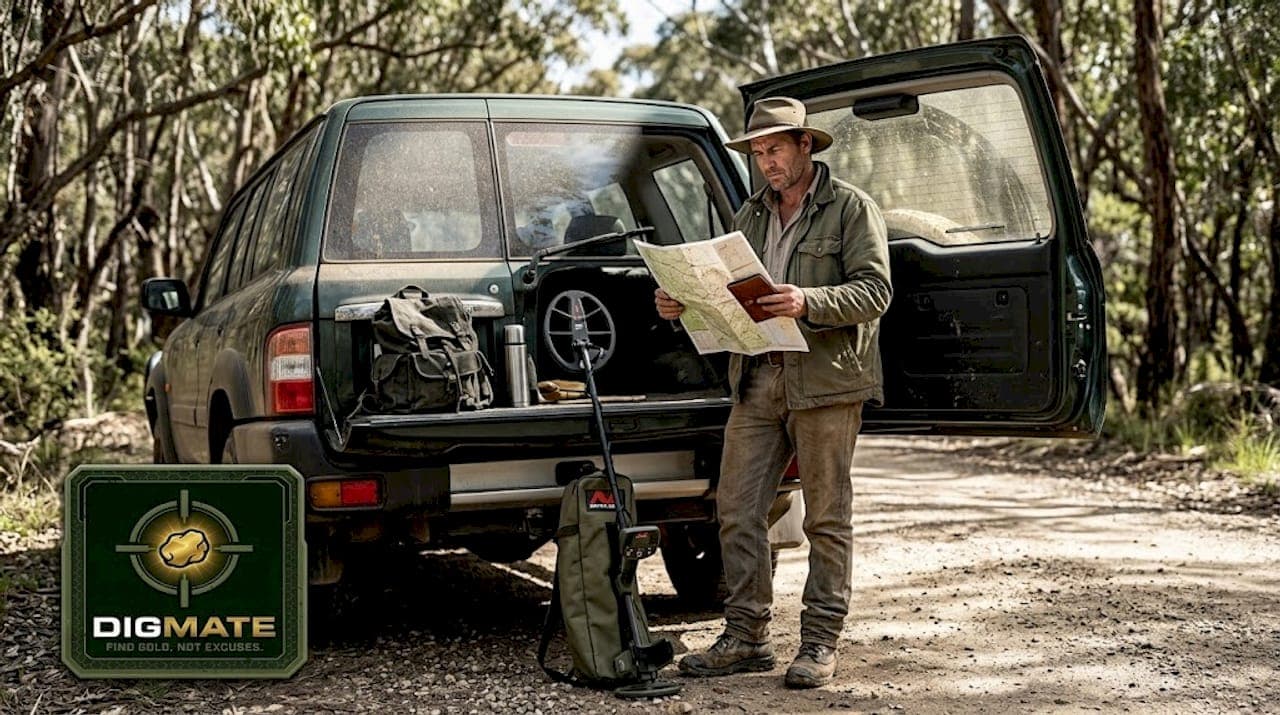
TL;DR:
- Beginners must understand local prospecting rules and acquire necessary permits to stay legal.
- AI and historic maps significantly improve site selection efficiency for amateur prospectors.
- Combining good research, proper technique, and legal compliance increases chances of success over luck.
Starting out as a prospector in New South Wales or Victoria is exciting, but the single biggest mistake beginners make is heading into the field without a plan. Random searching through creek beds and bushland wastes weekends, burns motivation, and too often ends with nothing to show for the effort. The good news is that the combination of local knowledge, clear legal compliance, and modern AI-powered tools has fundamentally changed what a beginner can achieve in their first season. This guide gives you the actionable roadmap to find more gold and gems faster, while staying completely on the right side of the law.
Table of Contents
- Start with local prospecting rules and permits
- Essential tools for your first prospecting trip
- Smart site selection: Combine historic maps with AI insights
- Simple field techniques and best practices
- Avoid common beginner mistakes
- Why focus plus tech beats luck every time
- Accelerate your prospecting journey with DigMate
- Frequently asked questions
Key Takeaways
| Point | Details |
|---|---|
| Legal basics first | Start with the right permits and local rules to stay compliant and avoid fines. |
| Combine maps with AI | Layer historic government maps and modern AI insights for the smartest site selection. |
| Use beginner tools | Stick with legal hand tools and add a basic metal detector for best early results. |
| Practice safe, clean prospecting | Respect land access, avoid risky sites, document finds, and leave no trace. |
| Tech is only part of success | AI helps, but learning local strategies and consistent practice are just as important. |
Start with local prospecting rules and permits
Before you swing a pick or dip a pan, you need to understand the legal framework. This is not the boring part. Getting it wrong can mean fines, confiscation of gear, or being banned from sites entirely.
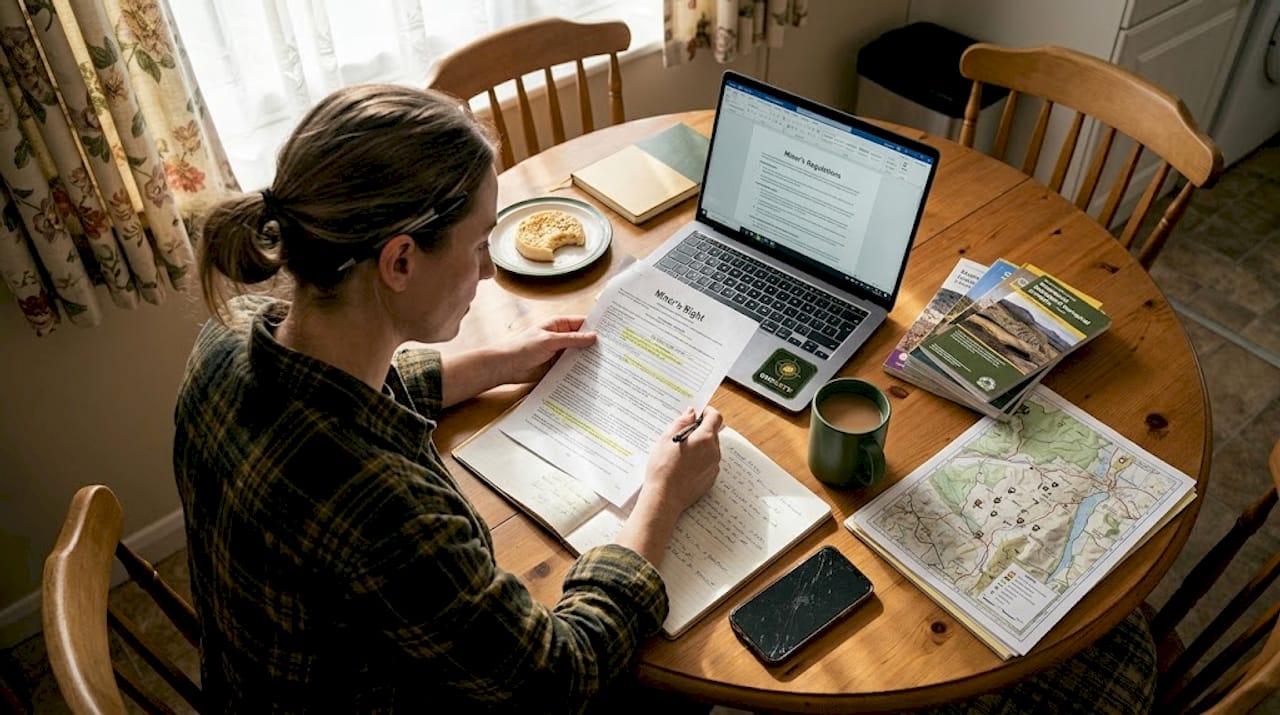
Victoria's Miner's Right is the essential starting document for any prospector in the state. According to Victoria's official requirements, a Miner's Right costs $28.60 and is valid for 10 years, making it one of the best-value licenses in Australian recreational activity. Children under 18 are exempt, which is great if you want to bring the family along. Critically, the Miner's Right authorizes hand tools only. No pumps, no sluices, no mechanical assistance.
In New South Wales, the rules operate slightly differently. The NSW Fossicking Guide outlines that you can fossick on Crown land and designated fossicking areas without a specific license in most cases, but you absolutely need written permission from the landholder before stepping onto private property. The disturbance limit is strict: no more than 1 cubic meter of material every 48 hours.
Here is a quick summary of where you can and cannot prospect:
- Allowed: Crown land with no competing tenure, designated fossicking areas, certain state forests (check each one individually)
- Restricted: National parks, marine parks, and Aboriginal land require special permits or are outright prohibited
- Private land: Always get written permission before entering, no exceptions
- Waterways: A 20-meter buffer applies in NSW; do not disturb creek banks or active waterways
- Post-fire land: Avoid recently burned sites; they are often closed and unstable
If you make a significant find, like a gold nugget over a certain size or a rare mineral specimen, you may have mandatory reporting obligations. Check state-specific rules on what qualifies.
"The rules exist to protect both the land and your right to keep prospecting. Prospectors who ignore regulations ruin access for everyone." Always check for seasonal restrictions, especially during fire bans and flood recovery periods when entire regions may be closed.
Understanding Victorian licence rules in full before your first trip will save you from costly surprises. Reviewing prospecting best practices for both states is also worth 30 minutes of your time before you leave the driveway.
Pro Tip: Bookmark the NSW Resources and Energy website and the Victorian Department of Jobs, Precincts and Regions pages. Rules for specific areas can change after fires, floods, or new mining tenements are granted.
Essential tools for your first prospecting trip
You do not need to spend thousands to get started. A focused, legal toolkit is lighter and cheaper than most beginners expect.
The core legal kit includes:
- Gold pan (16 or 18 inch for beginners)
- Classifier or sieve set (1/2 inch and 1/8 inch mesh)
- Small folding shovel and a rock pick
- Trowel for fine digging in tight spots
- Optional: entry-level metal detector (check local club recommendations)
As confirmed by Victoria's recreational prospecting rules, no machinery is permitted for recreational prospecting. That means you should not be looking at sluice boxes with pumps, high-bankers, or anything motorized. Hand tools only keeps you legal and, honestly, is more than enough to find real gold in the right spot.
What else goes in the pack:
- At least 2 liters of water per person
- Printed copies of your permit and any written land permissions
- Topographic maps and a compass (phone GPS fails without signal)
- First aid kit with blister treatment and sunscreen
- Snacks and a charged power bank for your device
Remote areas in the Victorian goldfields and far western NSW can be well outside mobile coverage. A printed map and a permit copy are not optional extras. They are your safety net if technology fails.
Choosing the best metal detectors for Australian goldfields is a separate conversation, but for your first few trips, a basic VLF detector in the $300 to $600 range is more than adequate. More expensive gear gives diminishing returns until your ground reading skills catch up to the technology. Similarly, researching gem prospecting tools specific to NSW and Victoria will help you decide whether a UV torch or jeweler's loupe belongs in your kit.
Pro Tip: Always carry printed permits and any written land permissions. In remote areas without phone signal, a digital copy on your phone is worthless if the battery is dead or you have no reception to verify documents online.
Smart site selection: Combine historic maps with AI insights
This is where most beginners leave serious performance on the table. Choosing where to dig is at least as important as how you dig.
Step-by-step site research process:
- Download free government historic gold maps from the NSW Department of Regional NSW or the Victorian Earth Resources portal
- Identify areas marked as "old diggings," "alluvial leads," or "known goldfields" on historic surveys
- Cross-reference with current land tenure maps to confirm the area is legally accessible
- Overlay AI-powered mineral targeting data to assess prospectivity scores
- Check satellite imagery for creek configurations, exposed bedrock, or quartz reef outcrops
- Plan your access route, parking, and egress before arrival
Modern tools like AI and geospatial platforms allow you to do in an afternoon what once took professional geologists weeks. CSIRO's research into AI mineral mapping, including tools using PRISMA and EnMAP satellite data, shows that AI prospectivity analysis can achieve over 90% accuracy in identifying mineral-bearing ground before a single hole is dug. That is a staggering improvement over the old "walk and hope" approach.
Here is a practical comparison of what manual research versus AI-assisted targeting delivers in the field:
| Factor | Manual map research | AI-assisted targeting |
|---|---|---|
| Time to shortlist 5 sites | 4 to 6 hours | 30 to 60 minutes |
| Historical data coverage | Good for known fields | Excellent, including anomaly detection |
| Accuracy on new ground | Moderate | High (90%+ for prospectivity) |
| Cost | Free (government maps) | Low to moderate (app subscriptions) |
| Beginner-friendly | Requires map reading skill | Highly accessible with guided UI |
| Real-time updates | No | Yes, with connected platforms |
The smarter prospecting approach is not about replacing your instincts with a computer. It is about giving your instincts better data to work with. The combination of a gold rush-era map and a modern AI overlay turns a vague "that creek looks promising" into a quantified, ranked target list.
Statistic callout: AI mineral mapping tools now claim over 90% accuracy for prospectivity analysis before any physical disturbance, according to CSIRO research. For beginners, this technology is genuinely leveling the playing field.
Explore top AI prospecting tools to find which platforms integrate best with NSW and Victorian goldfield data.
Simple field techniques and best practices
Good research gets you to the right spot. Good technique gets the gold out of the ground.
Core beginner field methods:
- Creek panning: Work from the inside bend of a waterway where gold naturally settles. Pan slowly and systematically. Speed is the enemy of fine gold recovery.
- Shallow detecting: Sweep in overlapping rows at consistent height and speed. Most beginners sweep too fast and miss signals.
- Grid searching: Mark out a 10 by 10 meter grid and work it thoroughly before moving on. Systematic beats random every time.
- Bedrock crevicing: Use a crevice tool to scrape out the base of exposed rock outcrops. Gold is heavy and sinks to the lowest point available.
Always follow the 20-meter waterway buffer in NSW. As outlined in the NSW Fossicking Guide, prospecting too close to active waterways, working post-fire land, or entering private land without written permission are all serious violations that can end your prospecting season fast.
Traditional vs. digital searching: A comparison
| Feature | Traditional panning/detecting | AI-assisted digital search |
|---|---|---|
| Setup cost | Low ($50 to $600) | Low to moderate (app + device) |
| Skill required | Moderate, learned physically | Lower, guided by data |
| Success rate on cold ground | Low to moderate | Moderate to high |
| Legal compliance | Easy to manage | Easy, with permit reminders |
| Best for | Known fields, creeks | New ground, anomaly hunting |
Document every find. Take photos with GPS coordinates if your device supports it. Record what tools you used and the depth of recovery. This data becomes your personal prospecting intelligence over time, and it helps you report significant finds accurately if required.
Pro Tip: Leave every site cleaner than you found it. Refill holes, remove litter, and avoid disturbing vegetation beyond what is necessary. Sites that look abused get closed. Sites that stay clean stay accessible.
Learning to master metal detecting technique is a gradual process, but even beginners who practice consistent grid patterns and slow sweep speeds consistently outperform those relying on random wandering with more expensive gear.
Avoid common beginner mistakes
Even well-prepared beginners make predictable errors. Knowing them in advance saves real money and frustration.
The most common rookie mistakes:
- Using prohibited tools: Bringing a sluice box with a water pump to a site where only hand tools are allowed. Not just illegal but embarrassing.
- Trespassing on private land: Assuming that unfenced land is public land. It almost never is in farming regions.
- Ignoring fire and flood closures: Heading out during a Total Fire Ban or into flood-impacted country where access is legally prohibited.
- Collecting without checking mineral ownership: Some minerals, including opals in designated fields, require a specific permit even on Crown land.
- Not carrying written permits: Having a digital version of your permit that you cannot access without mobile signal.
- Skipping the safety debrief: Not telling anyone where you are going or when you expect to return. Remote prospecting areas can be genuinely dangerous.
Compliance is not optional. Reporting significant finds, getting written permission for private land access, and operating only with legal equipment are baseline requirements, not suggestions.
"It is easier to avoid fines than pay them later. Do your homework, know the rules for every site you visit, and when in doubt, call the local authority before you dig."
Pro Tip: Bookmark your state's emergency land closure notification pages. Fire and flood closures are updated in near real-time, and accessing a closed area during an emergency is both dangerous and illegal, regardless of your permit status.
Why focus plus tech beats luck every time
Here is a perspective that might push back on what you have heard from online prospecting communities: AI tools are extraordinary research accelerators, but they are not shortcuts. Every week we see beginners who downloaded a mineral targeting app, drove to the highlighted zone, and came home empty-handed. Not because the AI was wrong, but because they skipped the field craft.
The prospectors who consistently find gold using modern tools are the ones who combine three things. They do thorough site research using both historic maps and AI overlays. They know their local regulations well enough to work confidently without second-guessing every move. And they have practiced their physical technique enough that their panning, detecting, or crevicing is actually efficient.
A real example from the Victorian goldfields near Bendigo: a group of hobbyist prospectors using DigMate's AI overlay identified an untouched lead that older maps showed as lightly worked in the 1860s. They found color on their first trip. Their neighbors, working the same general area by eye and instinct alone, found nothing over three consecutive weekends. The difference was not the AI by itself. It was the combination of good data, legal site access, and solid technique.
The learning curve in prospecting is real, and it is worth investing in. Tech is an amplifier. It makes skilled prospectors more effective and helps beginners avoid the worst time-wasting detours. But it cannot replace the judgment that comes from time in the field. Use your AI digital prospecting results to point you in the right direction, then show up and do the physical work well.
Accelerate your prospecting journey with DigMate
You now have the legal foundation, the gear list, the site selection process, and the field techniques. The next step is putting it all together with tools built specifically for NSW and Victoria prospecting.

DigMate brings government historic gold maps, AI-powered mineral targeting, and mobile prospecting tools into one platform designed for real conditions in Australian goldfields. Whether you are planning your first trip to Bathurst or targeting known gem country in the Snowy Mountains, you can access a free gold prospecting map to get started with zero cost. For prospectors ready to move into AI-assisted site selection and professional-level targeting, explore the full DigMate features to see how the platform integrates satellite data, land tenure overlays, and community reporting into one tool that fits in your pocket.
Frequently asked questions
Do I need a license or permit to start prospecting in Victoria or NSW?
In Victoria, you need a Miner's Right costing $28.60 for 10 years; in NSW, fossicking rules apply and you must get written permission from landholders for private land access.
Which AI prospecting tools work for beginners in Australia?
Beginner-friendly platforms include Farmonaut AI, CSIRO's satellite-based tools using PRISMA and EnMAP data, and DigMate for targeted NSW and Victorian goldfield prospecting.
Where can I legally prospect for gold in NSW and Victoria?
You can prospect on Crown land, designated fossicking areas, and certain state forests, provided you follow all permit and disturbance rules and have appropriate permissions in place.
What is the maximum ground disturbance allowed for recreational prospectors?
In NSW, the disturbance limit is 1 cubic meter every 48 hours, and all machinery is strictly prohibited for recreational prospectors in both NSW and Victoria.