
TL;DR:
- Successful gem prospecting relies on knowledge of land, proper tools, and site-specific methods.
- Permits are essential; in NSW a fossicking license and state forest authorization are required.
- Optimal sites include creek bends and historical alluvial deposits in NSW and Victoria.
Gem prospecting in New South Wales and Victoria isn't a game of chance reserved for the lucky few with deep pockets. Most people assume you need expensive gear or insider connections to find anything worth keeping. The truth is, the prospectors who consistently pull sapphires and zircons from creek beds aren't luckier than you. They simply know where to look, what tools to bring, and how to read the land. This guide breaks down the real methods, legal requirements, and site-specific knowledge that give you a genuine edge across NSW and Victoria.
Table of Contents
- Understanding gem prospecting: Definitions and context
- Legal requirements and permits in NSW and Victoria
- Where to prospect: Popular sites and alluvial hotspots
- Essential tools, methods, and insider techniques
- Beyond the basics: What most prospectors overlook
- Upgrade your gem prospecting journey
- Frequently asked questions
Key Takeaways
| Point | Details |
|---|---|
| Start with permits | Legal licenses are required for fossicking in NSW; get them before you dig. |
| Target alluvial hotspots | The most rewarding sites are often alluvial riverbeds and regions with historic gem finds. |
| Use expert methods | Applying proven field techniques and tapping local knowledge drastically improves results. |
| Practice sustainability | Responsible prospecting ensures continued access and preserves natural beauty. |
Understanding gem prospecting: Definitions and context
Gem prospecting is the hands-on search for gemstones in their natural environment. It's not the same as large-scale mining, which involves heavy machinery, corporate permits, and industrial extraction. And it's not purely scientific field research either. Prospecting sits in between: it's purposeful, methodical, and accessible to individuals willing to learn the landscape.
In NSW and Victoria, the landscape is remarkably well-suited to this activity. Both states have a long history of alluvial deposits, which are concentrations of minerals that have been eroded from their original rock source and carried by water into creeks, riverbeds, and floodplains. These deposits are the sweet spot for gem hunters because the natural sorting action of water concentrates heavy minerals in predictable locations.
Common gem prospecting activities include:
- Surface collecting: Walking and visually scanning exposed ground, creek banks, or dry riverbeds for gemstones
- Panning and sluicing: Using water flow to separate heavy minerals from lighter gravel and sediment
- Sieving gravels: Running material through mesh screens to isolate gem-sized particles
- Metal detecting: Useful for locating metallic minerals and identifying mineralized zones near gem deposits
One important distinction: gem prospecting focuses on alluvial areas and historical sites, with an expectation that prospectors rehabilitate any disturbed ground before leaving. This isn't optional etiquette. It's a core part of responsible practice that keeps areas open for future access.
"Prospecting is as much about reading the land as it is about digging. The creek doesn't lie. Follow the gravel, follow the bend, and the gems will be there."
Understanding prospecting site selection from the start saves you weeks of unproductive searching. The more you understand how alluvial systems work, the more efficiently you can target the right spots.
Legal requirements and permits in NSW and Victoria
Before you load the car and head to the nearest creek, you need to sort out your paperwork. Prospecting without the correct permits isn't just a technicality. It can result in fines and loss of access for the broader prospecting community.
In NSW, the rules are clearly structured. A fossicking license costs $48.40 for a two-year period and covers recreational fossicking on Crown land. If you want to prospect in state forests, you'll need a separate state forest authorization at $27.50 for 12 months. Both are straightforward to obtain and represent excellent value for the access they provide.
| Permit type | Where it applies | Cost | Duration |
|---|---|---|---|
| Fossicking license | Crown land (NSW) | $48.40 | 2 years |
| State forest authorization | State forests (NSW) | $27.50 | 12 months |
In Victoria, the Department of Energy, Environment and Climate Action manages prospecting access. Fossicking on public land generally requires a Miner's Right, which is similarly low-cost and easy to obtain online. Always verify current requirements directly with the relevant state authority before heading out, as conditions can change.
Beyond the licenses themselves, there are site-specific rules you need to follow:
- No prospecting in national parks or nature reserves without specific authorization
- Respect private land boundaries and always seek written permission from landowners
- Restore disturbed ground: fill holes, replace topsoil, and leave the site as you found it
- Observe any seasonal or environmental restrictions in sensitive waterways
Pro Tip: Download the relevant permit documentation to your phone before you go. Mobile coverage in remote prospecting areas is often unreliable, and having your license accessible offline avoids unnecessary complications.
Using site selection tools that overlay permit zones with geological data makes it much easier to plan compliant, productive trips from the start.
Where to prospect: Popular sites and alluvial hotspots
NSW and Victoria offer an impressive range of prospecting environments, from high-country creek systems to old alluvial mining fields. Knowing which regions produce which gems saves you enormous time.
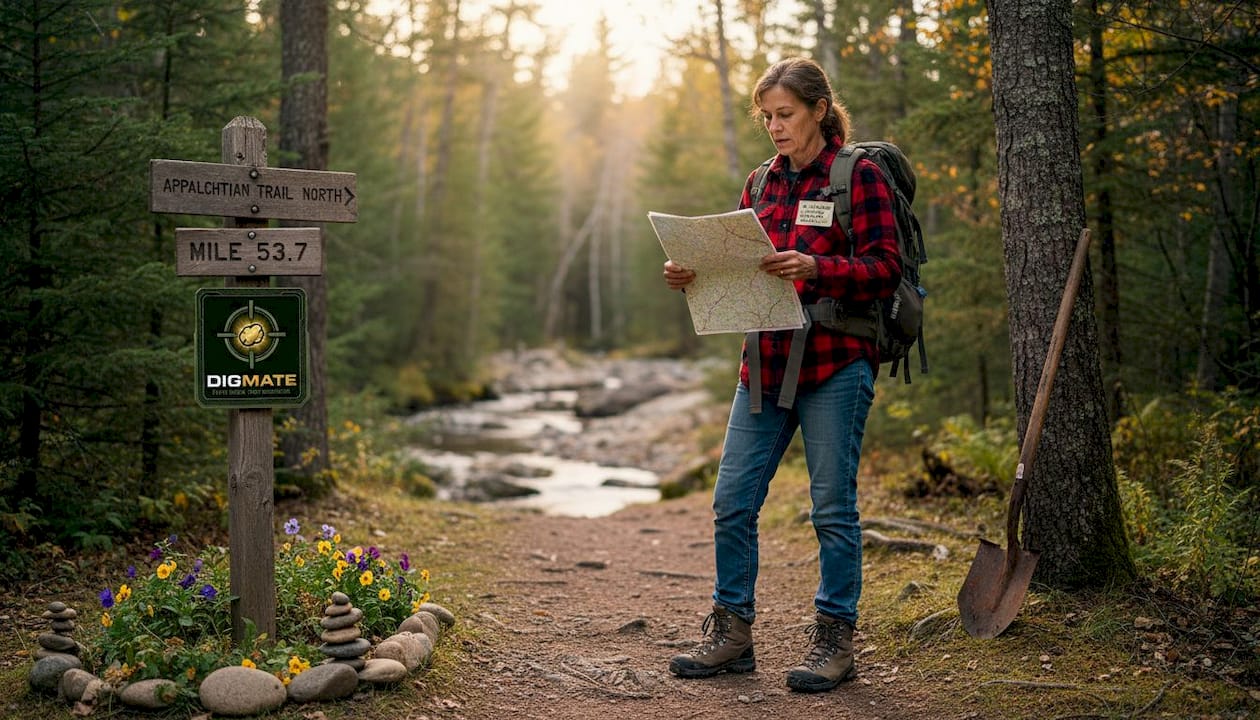
In NSW, the New England region stands out. Inverell and Glen Innes are internationally recognized for sapphires, zircons, and topaz found in alluvial deposits formed from ancient basalt flows. Oberon, west of the Blue Mountains, is another productive area with a well-established fossicking history. These gems were originally crystallized in igneous rock and then transported by millions of years of erosion into the creek gravels where prospectors find them today.
| Site type | Typical gems | Best method | Notes |
|---|---|---|---|
| Creek/river alluvial | Sapphires, zircons, topaz | Panning, sluicing | High concentration points at bends |
| Old mine fields | Sapphires, gold, quartz | Surface collecting, sieving | Historical records guide location |
| Basalt-derived gravels | Sapphires, zircons | Sieving, detecting | Look for dark, heavy gravels |
Alluvial deposits are important because water does the initial sorting work for you. Heavy minerals like sapphires and zircons sink and concentrate at the inside bends of creeks, behind large boulders, and at natural traps in the bedrock. These are your primary targets.
Key regions worth researching:
- Inverell and Glen Innes (NSW): Australia's most productive sapphire fields
- Oberon (NSW): Accessible fossicking with a strong local community
- Beechworth and Castlemaine (Victoria): Historic goldfields with gem-bearing gravels
- Rutherglen area (Victoria): Alluvial zones with varied mineral deposits
Using geodata for prospecting helps you identify which creek sections have the right geological conditions before you even leave home. That's a significant advantage over random searching.
Essential tools, methods, and insider techniques
With your site chosen and permits sorted, the next step is knowing what to bring and how to use it effectively. The good news: you don't need to spend thousands to get started.
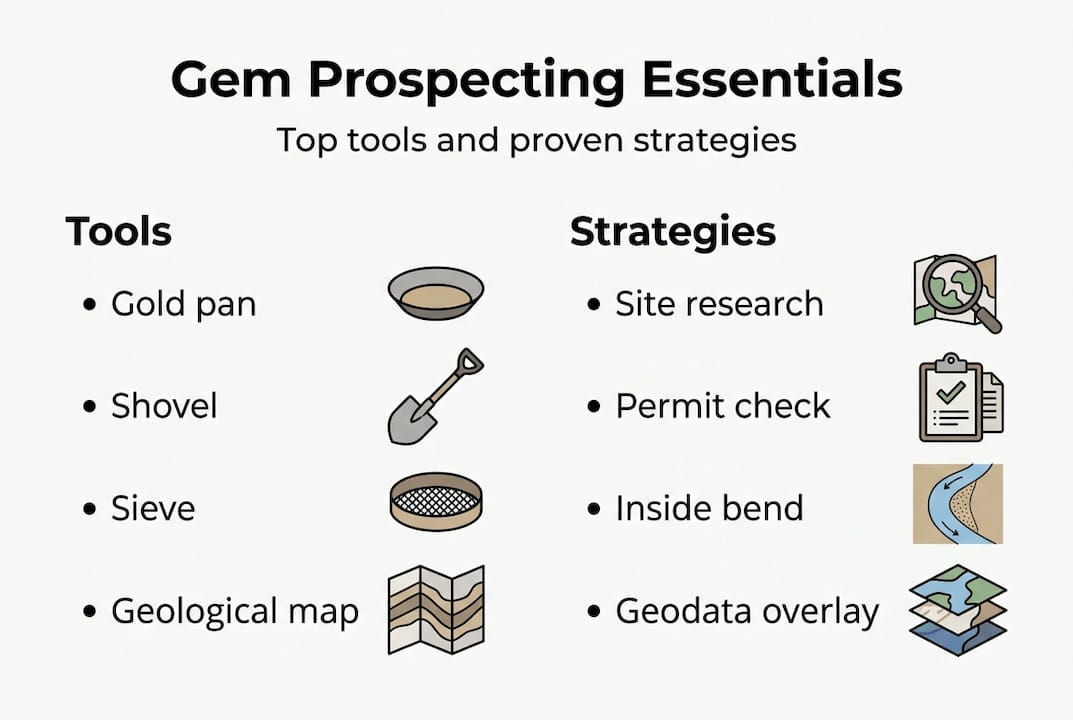
A basic but effective kit includes:
- Gold pan (10 to 14 inch): The foundation of alluvial prospecting. Lightweight, cheap, and effective for concentrating heavy minerals.
- Classifier/sieve set: Multiple mesh sizes let you sort gravel efficiently before panning.
- Small folding shovel: For sampling creek banks and gravel bars without heavy digging.
- Tweezers and collection vials: Essential for picking up and storing small gems without losing them.
- Geological map of the area: Printed or digital, covering the specific creek system you're targeting.
- Metal detector (optional but valuable): Useful for identifying mineralized zones and locating metallic minerals near gem deposits.
In the field, the process follows a logical sequence. Sample multiple spots before committing to one area. Dig material from the base of gravel bars or the bedrock surface where heavy minerals concentrate. Classify the material to remove oversized rocks, then pan the finer gravel in moving water.
"Working in direct sunlight makes a real difference. The light catches the flat faces of sapphires and zircons in the pan in a way that shade simply doesn't replicate."
This insight from experienced prospectors in the New England sapphire fields is genuinely useful. Many beginners pan in shaded spots for comfort and miss gems that would have been obvious in full light. Joining a local prospecting club also gives you access to decades of accumulated local knowledge that no map can fully replace.
Pro Tip: Work the inside bend of a creek first. Water slows at inside bends and drops its heaviest load there. That's where the sapphires and zircons pile up over time.
For more advanced detection approaches, understanding metal detector methods and exploring AI prospecting tools can significantly sharpen your targeting before you arrive on site.
Beyond the basics: What most prospectors overlook
Here's what separates consistent finders from weekend wanderers: most prospectors skip the research phase entirely. They pick a spot based on a forum post or a friend's vague recommendation, show up with a pan, and wonder why they're going home empty-handed.
Real success in gem prospecting comes from layering information. Geological maps show you where the right rock types exist. Historical mining records tell you where people found gems before. And geodata importance in modern prospecting cannot be overstated. When you combine spatial data with local club knowledge and proper site rehabilitation habits, you're not just finding more gems. You're building a repeatable system.
Sustainability matters more than most people realize. Sites that get trashed by careless prospectors get closed. Every hole you fill, every bank you restore, keeps that location accessible for your next trip and for the broader community. It's not just ethics. It's self-interest.
The prospectors who consistently find gems treat it like a craft, not a lottery. They invest time in preparation, respect the land, and build relationships within the prospecting community. That combination outperforms luck every single time.
Upgrade your gem prospecting journey
You now have a solid foundation: what gem prospecting involves, the permits you need, where the best sites are, and how to work them effectively. The next step is putting that knowledge into action with tools that make planning faster and smarter.

The DIGMATE app brings AI-driven mapping, geospatial data, and permit zone overlays into one platform built specifically for prospectors in NSW and Victoria. Instead of juggling multiple maps, permit documents, and geological reports, you get a single companion that helps you identify high-potential sites, stay compliant, and track your finds over time. Whether you're heading to Inverell for sapphires or exploring a new creek system in Victoria, DIGMATE gives you the data-backed confidence to prospect smarter from day one.
Frequently asked questions
Do I need a license for gem prospecting in NSW?
Yes. You need a fossicking license for Crown land and a separate state forest authorization if you plan to prospect in state forests. Both are available online.
What are the most common gemstones found in NSW and Victoria?
Sapphires, zircons, and topaz are the most commonly found gems, particularly in alluvial deposits near creek systems in the New England region and around Oberon.
What tools do beginners need for gem prospecting?
A gold pan, classifier sieve, small shovel, and a geological map covering alluvial areas are enough to get started. Add tweezers and collection vials for storing your finds.
How do I choose a good prospecting site?
Focus on known alluvial deposits near creek bends, cross-reference with geological maps for hotspots, and always verify local regulations before committing to a location.