
TL;DR:
- Gold detection combines geology, technology, and field strategy for consistent results.
- Understanding mineralization and selecting appropriate detectors are crucial for success.
- Combining tools like sampling, screening, and geospatial data enhances prospecting efficiency.
Gold detection in New South Wales and Victoria isn't a game of luck. It's a disciplined process that blends geology, technology, and field strategy into a repeatable system. Too many prospectors head out with a single device and vague hopes, then wonder why their results are inconsistent. The truth is that modern gold detection has evolved dramatically, and the prospectors pulling consistent finds are the ones who treat it like a science. This guide breaks down exactly what gold detection means, which tools and methods work best in NSW and Victoria, and how you can sharpen your approach to maximize every field session.
Table of Contents
- Defining gold detection: More than metal detectors
- Science and technology behind finding gold
- Field-tested methods: Screening, sampling, and verification
- Choosing the right gold detection strategy for your operation
- Why mastering gold detection is more than just having the right device
- Take your prospecting further with smarter tools
- Frequently asked questions
Key Takeaways
| Point | Details |
|---|---|
| Gold detection is multifaceted | It combines advanced tools, local geology, and hands-on testing to locate gold effectively. |
| Technology improves but doesn't replace skill | Choosing and using the right detector or screening method matters, but field experience and research drive success. |
| Recovery rates can be optimized | By utilizing sample screening, up to 80% of gold can be recovered in significantly reduced mass. |
| Strategy must fit the terrain | Adapting gold detection approaches to NSW and Victoria's unique conditions is essential for efficient prospecting. |
Defining gold detection: More than metal detectors
Gold detection, in a real prospecting or mining context, is the structured process of locating gold within the ground, riverbeds, rock formations, or alluvial deposits. It's not a single action. It's a sequence of decisions and techniques, each one building on the last.
The main goals of gold detection are straightforward: find where gold is likely to exist, confirm its presence, and recover it efficiently. That sounds simple, but achieving it consistently requires understanding three core processes.
Site selection is where everything starts. Choosing a location based on geological maps, historical records, and regional data dramatically increases your odds before you pick up a single tool. Field analysis comes next, where you use detection equipment and observation skills to narrow down target zones within a site. Finally, material testing confirms whether what you've found is actually gold and helps you decide if a site warrants further effort.
The major methods used in gold detection today include:
- Metal detecting (pulse induction and very low frequency devices)
- Geophysical surveys (ground-penetrating radar, electromagnetic methods)
- Sample screening and sorting
- Panning and sluicing for alluvial deposits
- Rock sampling and laboratory assay for hard rock targets
Each method suits different environments and target types. Over 60% of Victorian prospectors use metal detectors as their primary tool, which reflects both the accessibility and effectiveness of modern detector technology in this region. That said, detectors alone rarely tell the full story.
Pro Tip: Before you drive to a site, spend 30 minutes reviewing geological survey data for that area. Knowing the host rock types and historical gold occurrences can tell you more than a day of random swinging.
For prospectors weighing their equipment options, reviewing best metal detector options for Australian conditions is a solid starting point before committing to a purchase.
Science and technology behind finding gold
Understanding what gold detection entails sets up the next key question: what technologies and scientific methods actually make it effective, especially in the challenging terrain of NSW and Victoria?
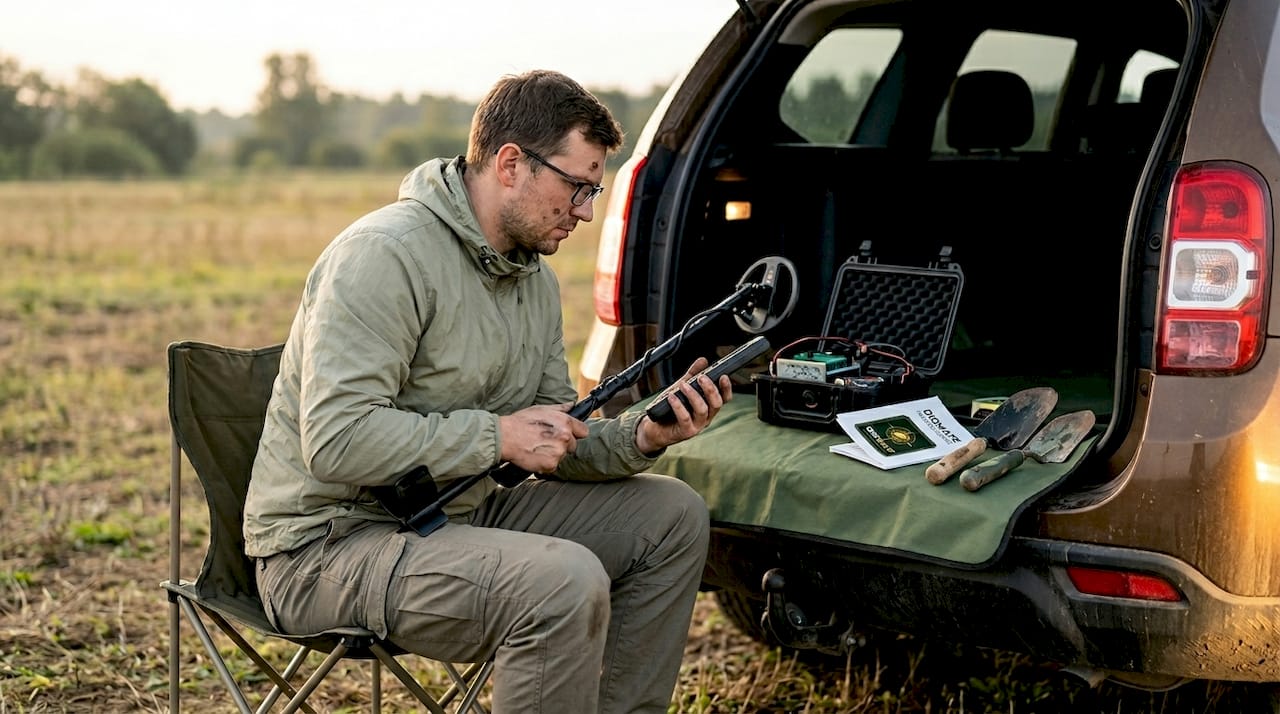
Metal detectors dominate the field for good reason, but not all detectors are equal. The two primary types are pulse induction (PI) and very low frequency (VLF) devices. VLF detectors are highly sensitive to small gold nuggets and work well in low-mineralization soils. PI detectors, on the other hand, penetrate deeper and handle highly mineralized ground far better. In fact, PI detectors achieve better depth in mineralized soils compared to VLF units, which makes them the preferred choice across much of Victoria and parts of NSW where ironstone and basalt dominate.
Mineralization is the single biggest variable that prospectors underestimate. High iron content in the soil creates background noise that masks gold signals and reduces effective detection depth. Knowing your target area's mineralization level before you arrive lets you choose the right device and set your sensitivity correctly.
| Detector Type | Best Soil Condition | Depth Advantage | Gold Size Sensitivity |
|---|---|---|---|
| VLF | Low mineralization | Shallow | Small nuggets, fine gold |
| PI | High mineralization | Deep | Medium to large nuggets |
NSW and Victoria each present distinct geological challenges. Victoria's goldfields, particularly around Bendigo and Ballarat, sit in heavily mineralized Ordovician sediments. NSW fields like Ophir and Hill End involve quartz reef systems where the gold occurs in hard rock rather than alluvial deposits. These differences demand different approaches and equipment setups.
"The geology doesn't care what detector you bought. It rewards the prospector who studied it first."
For alluvial targets specifically, understanding tools and techniques for alluvial gold gives you a real edge in creek and riverbed environments. You can also explore alluvial gold detection methods to see how exploration opportunities differ by deposit type. When you're ready to act on that knowledge, strategies for finding better prospecting locations help you apply geological insight to real site decisions.
Field-tested methods: Screening, sampling, and verification
Armed with technical knowledge, let's move into the field to see how top prospectors and miners actually detect and confirm the presence of gold.
Sample screening and sorting is one of the most underused techniques among recreational prospectors, yet it's a cornerstone of professional operations. The process involves collecting bulk material from a target zone, then mechanically separating it by size and density to concentrate any gold present. This cuts the volume of material you need to process while keeping most of the gold.
The numbers back this up. Screening and sorting recovers 70-80% of gold from just 30-40% of the original material mass when processing low-grade ores. That's a significant efficiency gain, especially when you're working a large area or dealing with fine gold that's hard to spot visually.
Here's a practical sequence for field detection and confirmation:
- Initial detection: Sweep the target area with your metal detector or conduct a visual geological survey to identify promising zones.
- Sample collection: Collect material from multiple points across the target zone, noting exact locations for each sample.
- Screening and sorting: Run material through appropriate mesh sizes to separate fine gold from bulk sediment or crushed rock.
- Field testing: Use a gold pan, loupe, or portable test kit to examine concentrated material for gold presence.
- Confirmation and documentation: Record findings with GPS coordinates, photos, and weight estimates before deciding on further extraction.
| Method | Best For | Time Required | Equipment Needed |
|---|---|---|---|
| Metal detecting | Nuggets, shallow bedrock | Fast | Detector, pinpointer |
| Screening/sorting | Alluvial, low-grade ore | Moderate | Screens, sluice box |
| Panning | Creek sediment, fine gold | Slow | Gold pan, water source |
| Rock sampling | Hard rock, reef gold | Variable | Hammer, sample bags |
Pro Tip: Always collect samples from multiple depth levels at a site. Gold in alluvial deposits often concentrates at bedrock level, not at the surface. Sampling only the top layer can give you a false negative on a productive site.
For more structured guidance on field procedures, browsing prospecting guides covers a wide range of scenarios. You can also sharpen your overall approach with resources focused on smarter mineral exploration in NSW and Victoria specifically.
Choosing the right gold detection strategy for your operation
With proven methods laid out, it's now crucial to understand how to select and tailor a gold detection strategy for your specific needs.
No single strategy works everywhere. The right approach depends on your target region, the type of deposit you're chasing, your available equipment, and the legal access conditions for that land. Here's how to think through each factor.
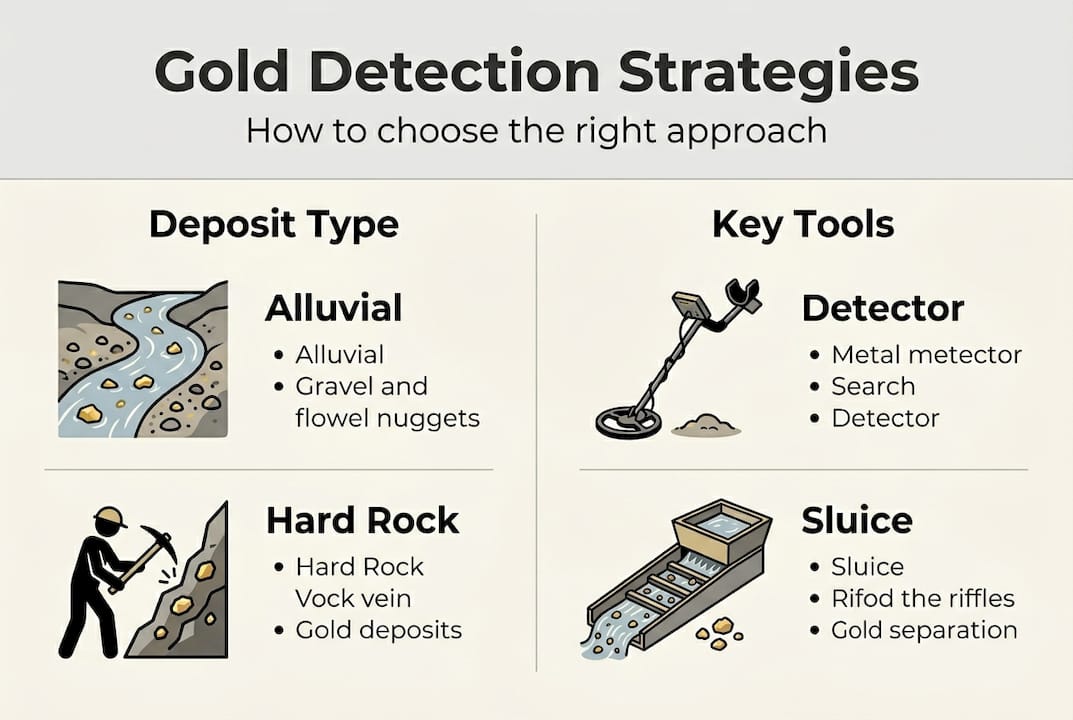
Understanding your geology first is non-negotiable. Check if your target area has alluvial deposits, hard rock reef systems, or eluvial (weathered bedrock) gold. Each type responds differently to detection methods. Alluvial gold suits detectors and screening. Reef gold often requires sampling and assay.
Legal access and permits matter more than most beginners realize. In NSW and Victoria, different land classifications require different permits or licenses. Operating without the right permissions doesn't just risk fines. It can get you permanently banned from productive areas.
Matching your equipment to the environment is where PI detectors achieve better depth in mineralized ground, making them the smarter choice for Victoria's ironstone-heavy goldfields. VLF units work well in NSW creek systems with lower soil mineralization.
Key factors to evaluate before any field session:
- Deposit type (alluvial, reef, eluvial)
- Soil mineralization level (high vs. low iron content)
- Land access status and required permits
- Seasonal conditions (water levels, ground hardness)
- Historical gold occurrence data for the specific area
- Equipment condition and battery/power supply
Pitfalls to avoid include over-relying on a single method, skipping site research in favor of gut instinct, and ignoring seasonal changes that affect detection conditions. For a complete framework, reviewing prospecting best practices for NSW and Victoria and smarter mineral exploration best practices will fill in the gaps that most field guides miss.
Why mastering gold detection is more than just having the right device
Here's a perspective that might challenge how you think about your next equipment purchase: the prospectors who consistently find gold aren't necessarily using the most expensive gear. They're the ones who've built a habit of studying their ground before they stand on it.
Top-tier technology doesn't guarantee results without careful planning and local knowledge. A $5,000 detector in the wrong location will outperform a $500 unit in the right one, but only if the operator of the cheaper device actually knows why they're standing where they are.
The real edge comes from ongoing study. Geology changes across even small distances. Tech updates shift what's possible. Field reports from other prospectors reveal patterns that no map shows. Adaptability and consistent record-keeping often do more for your long-term results than any single hardware upgrade. Log every site visit, every null result, every small find. Patterns emerge over time that point you toward better ground.
For those serious about building this kind of systematic skill, resources on mastering gold prospecting skills offer a practical path forward that goes well beyond gear selection.
Take your prospecting further with smarter tools
For those ready to put advanced gold detection insights into action, the next step is upgrading the tools you use in the field.
Digmate App brings AI-driven geospatial analysis directly to prospectors working in NSW and Victoria. Instead of relying on outdated maps or guesswork, you get real-time data layered onto your target area before and during your field sessions.

The AI ground scan feature helps you analyze subsurface conditions and prioritize zones worth investigating. The rock identification tool lets you quickly assess rock types in the field, so you can make faster, smarter decisions about where to dig. And if you're just getting started or scouting new territory, the free gold prospecting map gives you a data-backed starting point without any cost. These tools don't replace your skills. They sharpen them.
Frequently asked questions
What factors most impact gold detection success in NSW and Victoria?
Geology and soil mineralization, equipment selection, and site research are the biggest drivers of detection success. In highly mineralized ground, choosing the wrong detector type can reduce detection depth significantly.
Is gold detection just about using a metal detector?
No. While over 60% of Victorian prospectors use metal detectors, effective detection also involves site selection, sample analysis, and screening or geophysical methods depending on the deposit type.
How much gold recovery is possible with screening and sorting?
Screening and sorting can recover 70-80% of gold from just 30-40% of the processed material, making it one of the most efficient methods for low-grade ore environments.
Do equipment or local knowledge matter more?
Both play a role, but local geological knowledge consistently has a bigger impact on results than device cost alone. Knowing your ground lets you use any equipment more effectively.