
TL;DR:
- Proper knowledge of regulations and access rights is essential for legal and successful gold prospecting.
- Selecting the right tools and methods depends on terrain, target gold, and skill level.
- Patience, community involvement, and ethical practices are key to long-term success in gold prospecting.
Gold prospecting in New South Wales and Victoria is one of Australia's most rewarding outdoor pursuits, but the gap between casual hobbyists and consistent finders comes down to preparation. These two states hold some of the richest alluvial and reef gold deposits on the continent, yet national parks and private land are strictly off-limits without proper authorization. Knowing where you can legally dig, which tools suit your terrain, and how to read geological data separates productive outings from wasted weekends. This guide walks you through proven strategies covering site selection, tool choice, detection methods, and safety planning so you can prospect smarter and stay compliant.
Table of Contents
- Understand regulations and access rights
- Selection criteria for top prospecting tools
- Comparing detection methods for NSW and Victoria
- Making informed site choices and maximizing success
- Why patience, clubs, and ethical protocols are the real gold
- Take your gold prospecting further with DIGMATE
- Frequently asked questions
Key Takeaways
| Point | Details |
|---|---|
| Respect legal boundaries | Following regulations and reporting discoveries protects access and preserves heritage. |
| Choose the right tools | Use equipment suited to your site and conditions for the best prospecting results. |
| Leverage data and local knowledge | Combining geodata with gold club expertise improves site selection and success rates. |
| Prioritize safety and ethics | Patience, careful planning, and community support yield consistent results and safeguard the environment. |
Understand regulations and access rights
Before you pack a single piece of gear, you need to understand what the law allows. NSW and Victoria each have their own fossicking and prospecting frameworks, and getting this wrong can mean fines, confiscated equipment, or worse.
In NSW, a Fossicking Licence is required for recreational prospecting on permitted Crown land. Victoria requires a Miner's Right for most goldfields activity. Both states share a core set of prohibited zones:
- National parks and nature reserves: Prospecting is banned regardless of your licence type.
- Private land: You must have written permission from the landowner before entering.
- Aboriginal cultural heritage sites: These are protected under state and federal law. Disturbing them carries serious penalties.
- Water catchment areas: Many are restricted or require additional permits.
The NSW fossicking guide makes it clear that environmental rehabilitation is mandatory after any prospecting activity. That means filling holes, removing debris, and leaving the site as close to its natural state as possible.
"Prospecting is a privilege, not a right. Treating every site with respect ensures the land stays open for future generations of prospectors."
Reporting obligations are equally important. If you uncover a significant gold deposit or any item that looks like a heritage artifact, you are legally required to stop work and report the find to the relevant state authority immediately. Ignoring this rule risks criminal charges.
For those using electronic equipment, understanding metal detector restrictions by zone is critical, as some areas permit hand tools only. Practicing ethical prospecting also means respecting other prospectors' active claims and not encroaching on marked sites.
Pro Tip: Before heading out, call the local council or land management office to confirm current access conditions. Seasonal closures and fire restrictions can change permitted areas without much public notice.
Using site selection tools that overlay legal boundaries onto topographic maps saves you from accidentally crossing into restricted zones and helps you plan routes efficiently.
Selection criteria for top prospecting tools
Once you've verified permitted areas, choosing the right tools is the next step. The best kit for one prospector may be completely wrong for another, depending on terrain, target mineral, and experience level.
Start by matching your tools to the environment. Victoria's deep lead goldfields demand different equipment than the shallow alluvial creeks of central NSW. Key factors to evaluate include:
- Terrain type: Rocky outcrops favor metal detectors with ground-balancing features. Creekbeds favor pans and sluice boxes.
- Target mineral: Coarse alluvial gold is easier to catch with a pan. Fine flour gold needs a sluice or spiral wheel.
- Skill level: Beginners benefit from simple, reliable tools. Experienced prospectors can extract more value from advanced detectors.
- Portability: Remote locations require lightweight, packable gear. Weight adds up fast on long hikes.
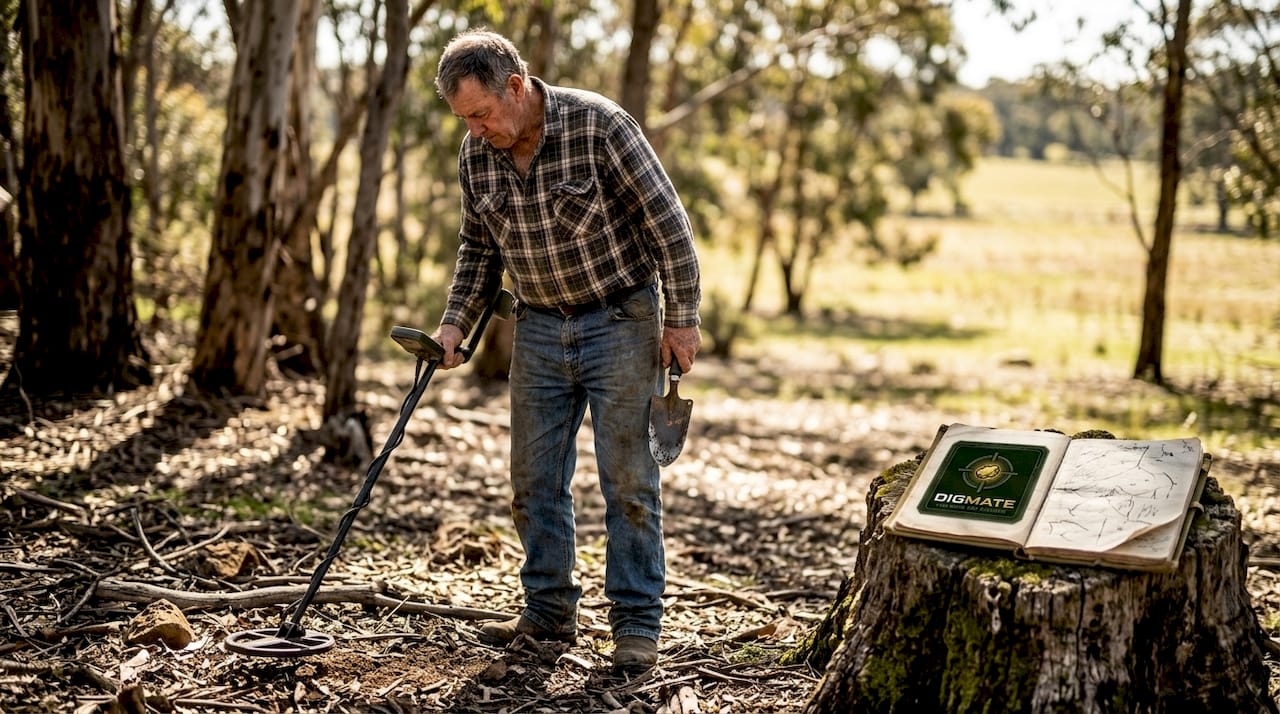
Metal detectors remain the most versatile tool for NSW and Victoria conditions. Look for models with high sensitivity to small targets, adjustable ground balance for mineralized soils, and waterproof coils for creek work. Brands with pulse induction technology handle the region's highly mineralized red soils far better than basic VLF detectors.
Mapping apps have become essential companions. They let you cross-reference historical find locations with current geological surveys, giving you a data edge before you even leave home. Exploring alluvial gold techniques alongside your mapping research helps you understand where gold concentrates naturally in a waterway.
As noted by experienced prospectors, patience and local knowledge are just as important as any piece of equipment. Joining a local gold club gives you access to members who have prospected the same ground for decades. They know which creeks run color after rain and which areas have been worked out.
Pro Tip: Borrow before you buy. Most gold clubs have equipment libraries or informal loan arrangements. Testing a detector on real ground before spending $1,500 is always a smart move.
For a deeper look at how AI prospecting tools are changing site analysis, the technology is now accessible enough for individual prospectors, not just exploration companies.
Comparing detection methods for NSW and Victoria
With your toolkit ready, let's compare popular methods for uncovering gold in the region. Each approach has real strengths and genuine limitations depending on where and how you prospect.
| Method | Cost range | Best terrain | Typical yield | Skill needed |
|---|---|---|---|---|
| Gold panning | Low ($20-$80) | Creeks, rivers | Fine to coarse alluvial | Beginner |
| Sluice box | Medium ($100-$400) | High-flow creeks | Fine alluvial, flour gold | Beginner to intermediate |
| Metal detector | High ($500-$5,000+) | Dry ground, reefs | Nuggets, coarse gold | Intermediate to advanced |
| Geodata analysis | Variable (app-based) | Any terrain | Predictive, not physical | Intermediate |
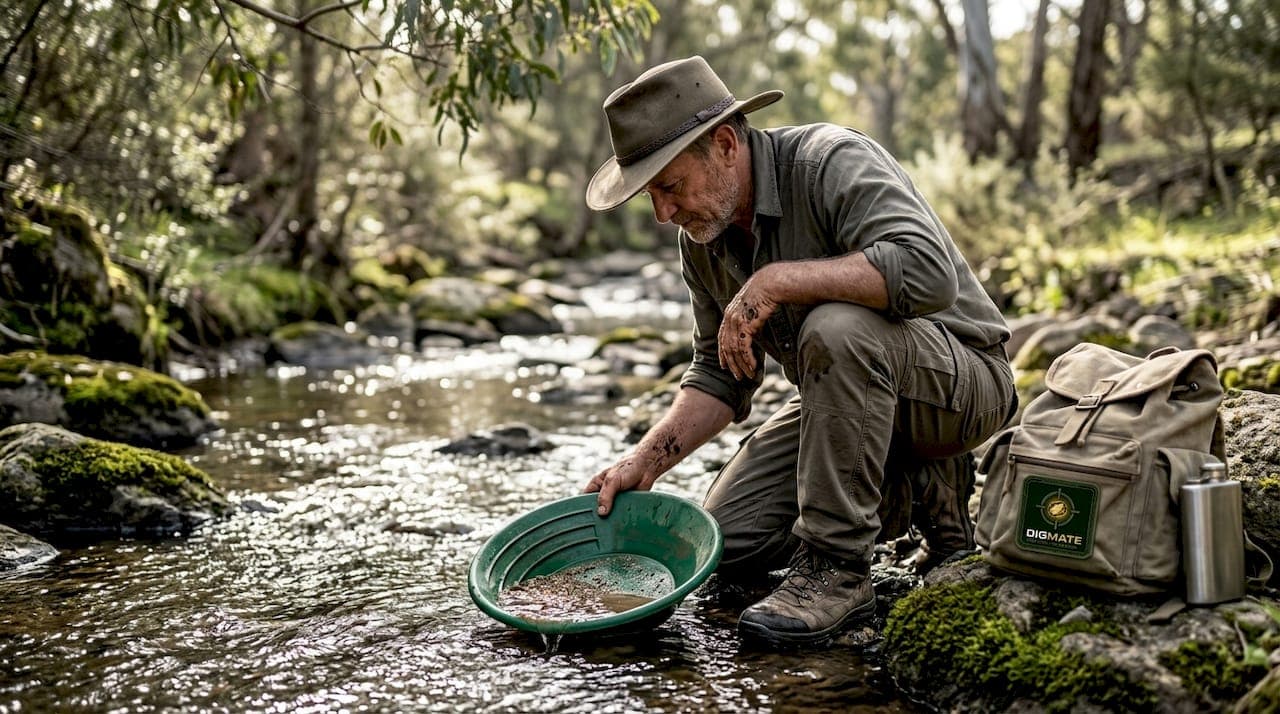
Gold panning is the entry point for most prospectors. It costs almost nothing to start, teaches you to read water flow and gold behavior, and requires no power source. The downside is yield: panning is slow and labor-intensive for large volumes of material.
Metal detecting covers far more ground per hour and can find gold at depth that panning would miss entirely. The challenge in NSW and Victoria is the highly mineralized soil, which creates false signals on poorly tuned machines. Investing time in learning your detector's ground balance settings pays off significantly.
Geodatanalysis through mapping apps sits in a different category. It doesn't find gold directly but dramatically improves your odds by pointing you toward geologically favorable ground. Reviewing site selection tips alongside geodata layers helps you filter out low-probability locations before you spend a day on the ground.
Safety considerations also influence method choice. Solo detecting in remote areas carries real risk. Joining clubs for local knowledge means you also gain a safety network of people who know where you're going.
"The best detection method is the one you understand completely. A prospector who masters a basic pan will outperform someone who barely knows their $3,000 detector."
For a full breakdown of how these approaches work in practice, the guide on detection methods explained covers the technical details worth studying before your next outing.
Making informed site choices and maximizing success
Now, let's focus on how to pinpoint the best prospecting locations and boost your chances. Site selection is where most prospectors either win or lose before they've turned a single shovel of dirt.
Use this checklist before committing to any location:
- Geology: Is the area associated with known gold-bearing formations like granite contacts or quartz reefs?
- Historical finds: Have previous prospectors reported gold here? Old mining records are publicly available and invaluable.
- Legal status: Confirm the land classification, current permits required, and any seasonal restrictions.
- Accessibility: Can you safely reach and exit the site, especially in wet weather or extreme heat?
- Water availability: Panning and sluicing require water. Dry detecting doesn't, but water sources also indicate alluvial pathways.
Geodatanalysis tools have transformed site research. Instead of relying purely on word-of-mouth, you can now overlay geological survey data, historical mining records, and topographic maps in a single view. Understanding why geodata matters for mineral prospecting gives you a measurable advantage over prospectors still relying solely on intuition.
| Site factor | High priority | Lower priority |
|---|---|---|
| Geology | Quartz reef, granite contact | Sedimentary plains |
| Historical activity | Recorded finds, old workings | No prior records |
| Legal access | Crown land with permit | Unverified status |
| Terrain | Creek bends, bedrock exposure | Flat, featureless ground |
Local clubs and experienced prospectors provide real-time intelligence that no database can match. A club member who was on-site last weekend knows whether the creek is running color or whether a particular gully has been heavily worked recently. This is the kind of local knowledge for site selection that saves you hours of unproductive searching.
Safety planning is non-negotiable. NSW and Victoria's goldfields include remote terrain with genuine wildlife hazards, flash flood risk, and extreme summer temperatures. Always tell someone your planned location, carry a personal locator beacon in remote areas, and check weather forecasts before departing.
Pro Tip: Creek bends and bedrock exposures are natural gold traps. Water slows at bends and drops heavy material. If you see exposed bedrock in a creek, work every crack and crevice carefully before moving on.
Combining smarter site selection tools with on-the-ground observation gives you the most complete picture of a site's potential.
Why patience, clubs, and ethical protocols are the real gold
Here's an honest perspective on what separates casual seekers from consistent finders: it's rarely the equipment.
Most prospectors who struggle are chasing shortcuts. They buy expensive detectors expecting instant results, skip the research phase, and move on after one unproductive session. Consistent finders do the opposite. They work the same ground multiple times, adjust their approach after each outing, and treat every blank session as data rather than failure.
Gold clubs are chronically underrated. Many prospectors see them as social clubs for retirees. In reality, they are the most concentrated source of regional knowledge available anywhere. A single conversation with a long-term club member can redirect your entire season toward productive ground.
Ethical standards aren't just about compliance. They protect future access. When prospectors damage sites, leave holes unfilled, or ignore cultural heritage obligations, land managers respond by closing areas permanently. Every prospector who cuts corners makes it harder for everyone who follows. Reporting heritage finds immediately is both a legal requirement and a professional standard worth taking seriously.
For those curious about how community resources connect to broader prospecting networks, local clubs in prospecting are becoming increasingly integrated with digital tools. And if you're thinking about the broader value of what you find, understanding gold trading insights helps you make informed decisions about significant discoveries.
Patience, community, and ethics aren't soft skills. They are the actual foundation of long-term success in this field.
Take your gold prospecting further with DIGMATE
Applying best practices manually takes time, but the right technology closes that gap fast. Digmate App brings AI-driven mineral detection, geospatial mapping, and historical find data into one platform built specifically for NSW and Victoria prospectors.

Whether you're researching a new site from home or cross-referencing geological data in the field, Digmate's prospecting tools give you the kind of data advantage that used to require a professional geology team. The platform integrates legal boundary overlays, real-time mapping, and community-sourced insights so you spend less time guessing and more time finding. If you're serious about improving your results, Digmate is the logical next step.
Frequently asked questions
Where can I legally prospect for gold in NSW and Victoria?
Gold prospecting is permitted on designated Crown land with the appropriate licence or Miner's Right, but prohibited in national parks, private property without written permission, and protected cultural heritage sites.
What tools are most effective for gold prospecting in these regions?
Metal detectors with ground-balancing capability, traditional gold pans, and mapping apps for site research are the most effective combination, with tool choice depending on terrain type and target gold form.
How should I report significant gold finds or heritage items?
Stop work immediately and report significant finds to the relevant state authority. For heritage artifacts, contact the state heritage office directly and do not disturb the surrounding area.
Why is joining a gold prospecting club recommended?
Clubs provide local knowledge and permitted locations that no database can replicate, along with safety networks, equipment access, and validated prospecting methods that dramatically improve your success rate.