
TL;DR:
- Victoria has produced over 80 million ounces of gold and hosts diverse critical minerals.
- Rising gold prices and regulatory reforms are fueling exploration and investment in the state.
- Advanced AI tools improve prospecting success by revealing hidden, covered, and nuggety deposits.
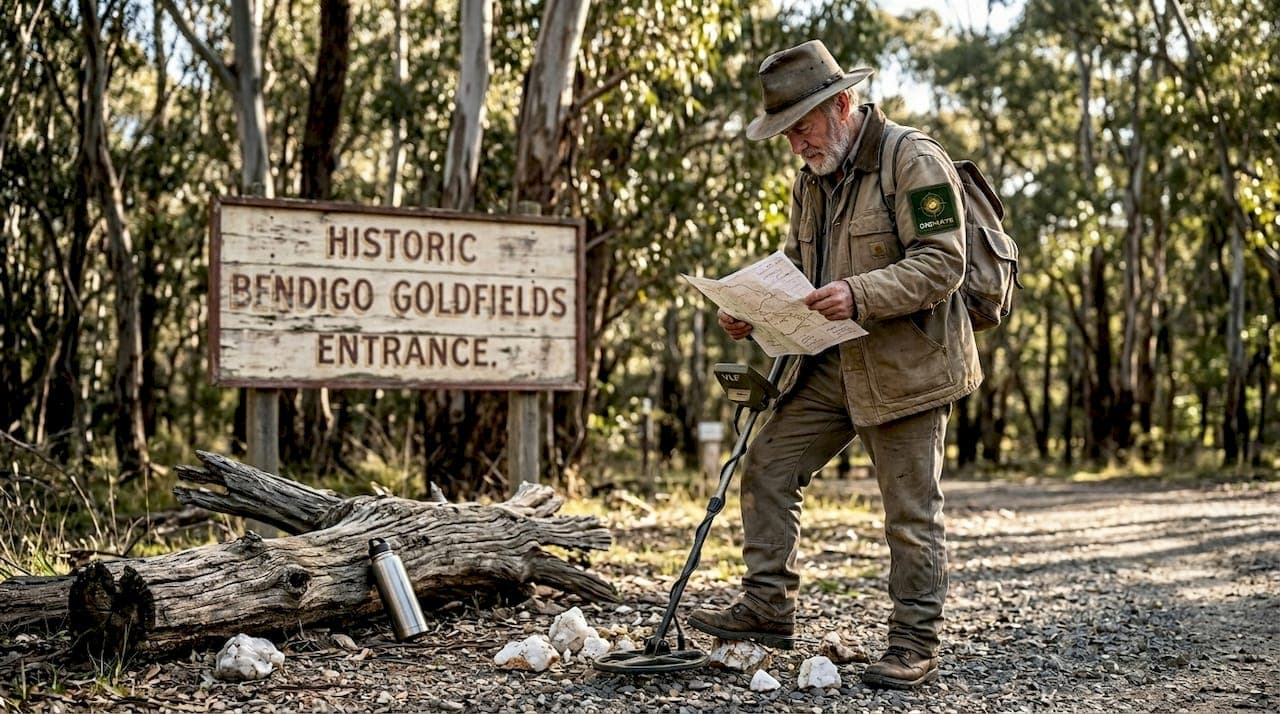
Victoria's goldfields have quietly produced more than 80 million ounces of gold across their history, making the state one of the most remarkable mineral provinces on the planet. Yet many prospectors still think the gold rush era is ancient history. It isn't. Rising commodity prices, sweeping regulatory reforms, and a new generation of AI-powered detection tools are turning Victoria into one of the most exciting destinations for both individual prospectors and large exploration companies. This guide breaks down exactly what makes Victoria stand out, from the scale of its mineral wealth to the practical steps you need to take to get started today.
Table of Contents
- Victoria's mineral wealth: Goldfields, critical minerals, and global standing
- Economic drivers: Gold prices, investment, and regulatory momentum
- Geology, technology, and the AI opportunity: Why advanced methods thrive here
- Access for all: Individual prospecting, cost, and practical realities
- The overlooked edge: Persistence, ingenuity, and the true payoff in Victoria
- Take your next step in Victorian prospecting
- Frequently asked questions
Key Takeaways
| Point | Details |
|---|---|
| Huge untapped potential | Victoria’s rich goldfields and critical minerals remain prime for discovery, with tens of millions of ounces still likely undercover. |
| Tech and regulation shifts | Surging gold prices, investment, and streamlined approvals make Victoria more attractive for modern prospectors and companies. |
| AI advantage | Advanced tools like AI/ML modeling and satellite imaging thrive in Victoria’s challenging geology, finding gold others miss. |
| Low entry barrier | Individuals can start prospecting for less than $30 with simple legal steps, making Victoria accessible for all skill levels. |
Victoria's mineral wealth: Goldfields, critical minerals, and global standing
When people think of historic gold rushes, California or the Klondike come to mind before Victoria. That's a costly oversight. Victoria's goldfields have produced more than 80 million ounces of gold historically, with 13 individual goldfields each exceeding 1 million ounces. To put that in perspective, most countries have never produced that much gold in total.
The diversity here goes well beyond gold. Victoria hosts Australia's only antimony mine and holds the largest mineral sands reserves in the country. Rare earth elements, copper, and mineral sands are drawing serious corporate interest, backed by the state's Critical Minerals Roadmap introduced in 2024. That roadmap isn't just a policy document. It's an active investment framework with funding, fast-tracked approvals, and geological survey support attached.
Key minerals currently attracting exploration in Victoria:
- Gold (orogenic lode systems and alluvial deposits)
- Antimony (strategic critical mineral, sole Australian producer)
- Mineral sands (titanium, zircon, rare earths)
- Copper and base metals
- Rare earth elements (REEs)
| Goldfield | Estimated output (oz) | Status |
|---|---|---|
| Bendigo | 22 million+ | Historically worked, active deep exploration |
| Ballarat | 12 million+ | Ongoing underground studies |
| Fosterville | 6 million+ | World-class high-grade active mine |
| Stawell | 5 million+ | Active production |
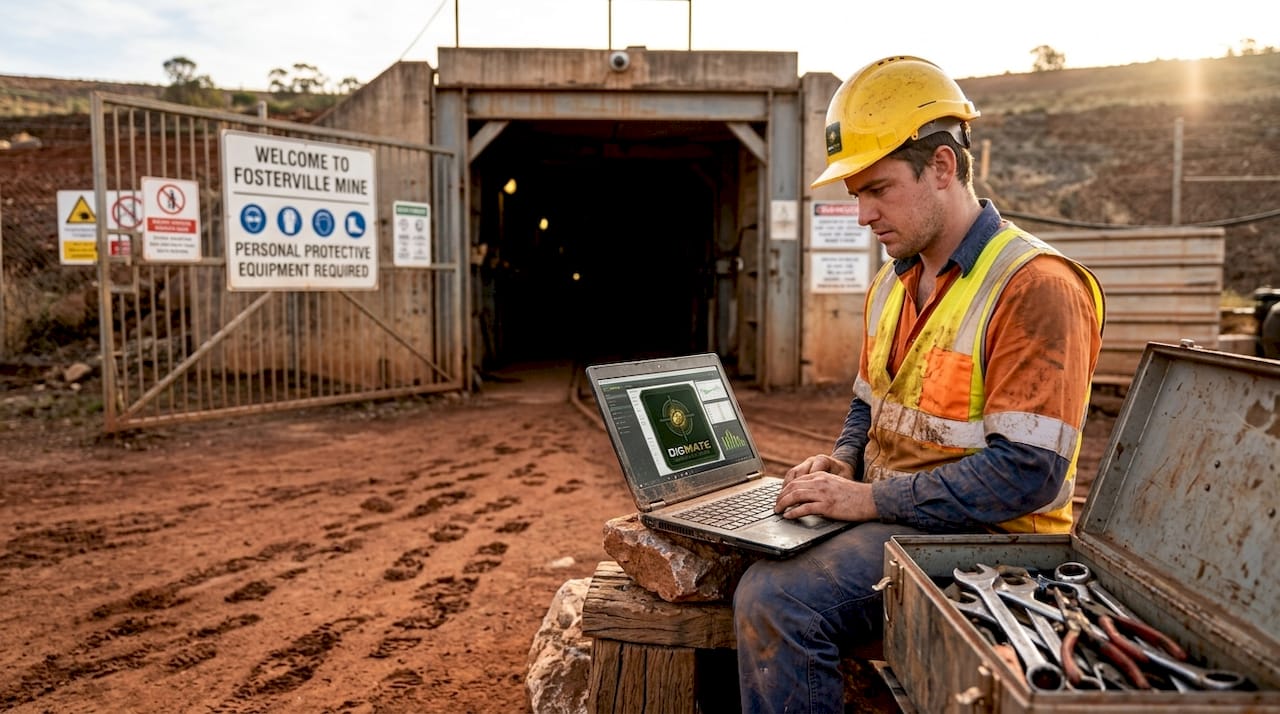
Fosterville is arguably Victoria's most powerful proof point right now. It operates at grades that make most other gold operations globally look modest. That kind of performance reassures investors and prospectors alike that Victoria's ground still has serious substance.
For prospectors wanting to understand how to approach these areas strategically, the gold prospecting best practices for New South Wales and Victoria is a solid starting framework. Understanding the underlying gold geology in Victoria will also give you a sharper edge before you put boots on the ground.
Economic drivers: Gold prices, investment, and regulatory momentum
Geology creates opportunity. Economics and regulation determine whether that opportunity gets realized. In Victoria right now, both are pointing in the same direction.
Gold rose 45% in 2025, triggering a surge in exploration budgets across the state. Victoria has set an ambitious target of $6 billion in annual mineral value by 2030. That number isn't aspirational posturing. It reflects actual committed exploration spending and a pipeline of projects already underway.
On the regulatory side, faster license approvals have transformed the investment climate. What previously took months can now move significantly quicker, removing one of the biggest barriers that frustrated companies trying to enter the market.
How the economic cycle is working right now:
- Higher gold prices increase the economic viability of lower-grade deposits.
- Increased viability attracts exploration capital from juniors and majors.
- Regulatory reform reduces time-to-production.
- Successful discoveries reinforce investor confidence and restart the cycle.
| Indicator | 2022 | 2025 change |
|---|---|---|
| Gold price per ounce (USD) | ~$1,800 | ~$2,600+ (up 45%) |
| Victorian exploration licenses | Moderate activity | Surging new applications |
| Target annual mineral value | No formal target | $6B by 2030 |
Victoria is no longer just a historic goldfield. It's an active, competitive mining jurisdiction with the economic and regulatory conditions to support serious exploration across multiple commodities.
For individuals and companies wanting to move efficiently through the prospecting process, understanding mineral exploration tips for smarter site selection can dramatically reduce wasted time and capital.
Geology, technology, and the AI opportunity: Why advanced methods thrive here
Here's the honest challenge with Victorian gold: it's notoriously difficult to find using traditional methods. The gold here is often nuggety, meaning it concentrates in tight clusters rather than spreading evenly through ore bodies. A sample taken 10 meters from a rich zone can look completely barren. Standard grid sampling methods frequently miss it.
Then there's the under-cover problem. Large portions of Victoria's prospective geology lie beneath transported sediment cover, invisible to surface prospecting and conventional methods. Victoria's complex orogenic gold zones are precisely where machine learning driven 3D modeling, satellite hyperspectral imaging, and pathfinder mineral analytics deliver results that old-school methods simply cannot match.
Pathfinder minerals are elements that accompany gold deposits, particularly arsenic and antimony, which are detectable through geochemical sampling and remote sensing even when the gold itself isn't visible. Mapping these signatures with AI tools dramatically narrows the search area.
The results speak clearly. Recent 3D modeling and AI work suggests up to 75 million ounces of gold remain undiscovered across Victoria's fields. That figure reframes everything. Victoria isn't a depleted province. It's an under-explored one.
Pro Tip: If you're prospecting near historically worked areas, don't assume the easy gold is gone. Nuggety deposits mean richly mineralized zones are often just meters away from thoroughly worked ground.
What AI and advanced tools bring to Victorian prospecting:
- Predictive targeting using historical drilling and geochemical data
- Satellite hyperspectral analysis for pathfinder mineral mapping
- 3D subsurface modeling to identify covered structures
- Real-time geospatial data layering for field decisions
Exploring the available AI tools for mineral detection is now a practical step, not just a theoretical one. Combined with smarter prospecting site selection methods, the technology is changing who finds gold and how quickly they find it.
Access for all: Individual prospecting, cost, and practical realities
Not every prospector is running an exploration company. For individuals, Victoria offers some of the most accessible entry conditions of any mineral-rich jurisdiction globally. And the cost? Lower than a Netflix subscription on a monthly basis.
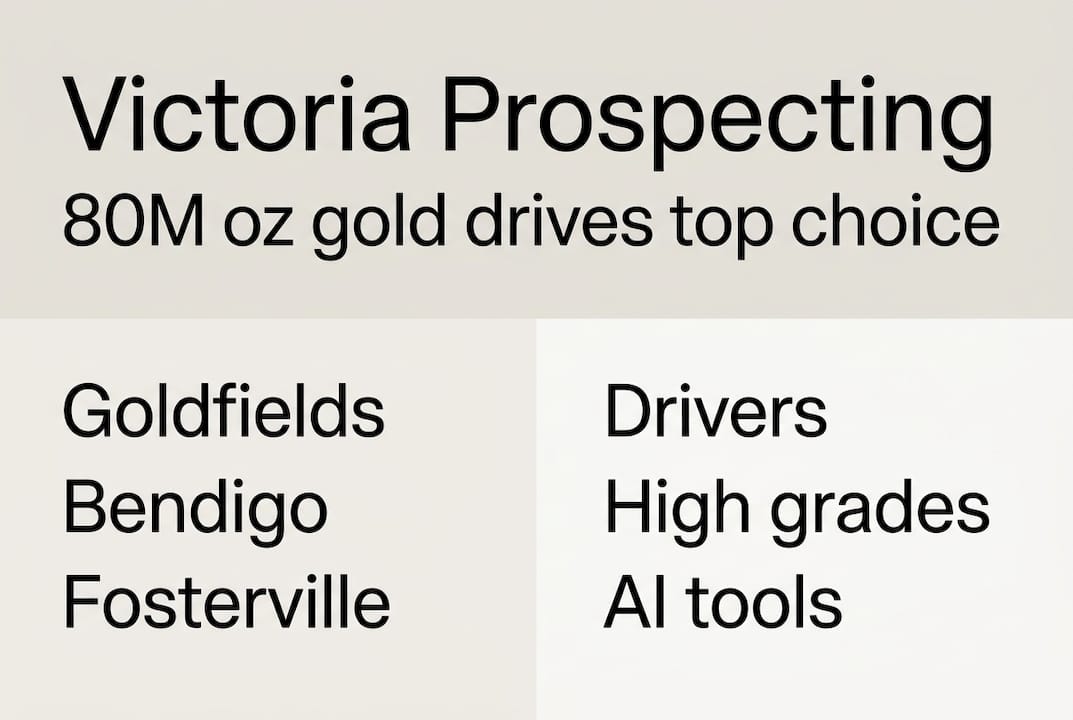
A Miner's Right costs $25 to $28 for a full 10 years. That license allows you to use hand tools and metal detectors on designated Crown land and state forests, giving you legal access to genuinely prospective country without needing a corporate exploration license. Heavy machinery is not permitted under this license, but for individual detectorists and hand prospectors, it covers everything you need.
How to get started as an individual prospector in Victoria:
- Purchase a Miner's Right through Resources Victoria (valid 10 years).
- Check which state forests and Crown land parcels are open to prospecting.
- Select your target area using geological maps and AI-assisted tools.
- Use approved equipment: hand tools, picks, shovels, and metal detectors.
- Backfill all holes you dig. This is a legal requirement, not optional.
- Avoid national parks, restricted mineral land, and private property without permission.
| License type | Cost | Duration | Equipment allowed |
|---|---|---|---|
| Miner's Right | $25.20 to $28.60 | 10 years | Hand tools, metal detectors |
| Exploration license | Variable | 5 years (renewable) | All survey equipment |
| Mining license | Variable | Defined by project | Heavy machinery |
Compliance matters as much as technique. Understanding the prospecting license rules before you head out saves you from fines and site bans. Once you're legal and on the right ground, sharpening your metal detector prospecting skills will directly translate to better finds.
Pro Tip: State forests near Bendigo and Castlemaine are frequently productive for detector work. Focus on creek margins and exposed quartz reef outcrops where gold tends to concentrate naturally.
The overlooked edge: Persistence, ingenuity, and the true payoff in Victoria
Here's the view that most mining guides won't give you. Victoria is not easy prospecting ground. It punishes those who show up expecting surface nuggets and walks away with a pocketful of finds in an afternoon. The geology is complex, the regulations require attention, and the nuggety nature of gold deposits means you can work good ground and see nothing for days.
But that difficulty is exactly why the opportunity remains. Most casual prospectors move on. The ground gets left for those who combine patience with data-driven methodology.
Fosterville is the clearest example of this principle. For years it was considered a modest, nearly exhausted operation. Then unconventional thinking and modern exploration methods revealed it to be one of the world's highest-grade gold mines. Victoria's revival wasn't luck. It was persistence married to better tools and fresher thinking.
For individual prospectors and companies alike, the real payoff comes from treating Victoria as a long-term game. Mapping multiple targets, analyzing geochemical data between trips, using AI to prioritize where effort gets concentrated, and revising strategy based on results. That approach mirrors what the prospecting best practices community has learned over decades. Luck has a role, but consistent success in Victorian fields belongs to those who out-think the ground, not just those who cover the most of it.
Take your next step in Victorian prospecting
Ready to put insight into practice? Here's how you can start prospecting smarter in Victoria right now.
The DigMate prospecting platform brings together AI analysis, geospatial mapping, and real-time site data into one tool purpose-built for prospectors and exploration companies operating in Victoria and New South Wales. Whether you're an individual with a Miner's Right or a company planning your next exploration campaign, DigMate removes the guesswork from site selection and keeps you on the right side of compliance requirements.

Start by exploring the free Victorian gold maps to identify prospective zones near you. Then dig into the AI prospecting features to see how pathfinder mineral data, 3D targeting, and historical drilling layers can sharpen your strategy before you spend a dollar on fuel or equipment.
Frequently asked questions
How much is a prospector's license in Victoria and what does it allow?
A Miner's Right costs between $25.20 and $28.60 for 10 years, covering the use of hand tools and metal detectors on eligible public land, but not heavy machinery or equipment requiring mechanical power.
Why is Victoria a top gold prospecting region compared to other parts of Australia?
Victoria's goldfields have delivered over 80 million ounces historically and continue producing at world-class mines like Fosterville, supported by favorable geology, rising gold prices, and an improving regulatory environment.
How has AI changed gold and mineral prospecting in Victoria?
AI and 3D modeling now enable detection of complex orogenic deposits and covered zones that traditional sampling consistently misses, with Victoria's geology ideal for machine learning and satellite pathfinder analysis.
What are the most important regulations for gold prospectors in Victoria?
Prospectors must hold a current Miner's Right, use only approved equipment, operate on designated public land, and fill all excavated holes as required under Victoria's prospecting rules.