
TL;DR:
- A prospecting companion is an AI-supported software that enhances mineral exploration workflows.
- These tools analyze geological data, identify high-probability sites, and guide field decisions in real time.
- Choosing validated, region-specific platforms is essential for effective prospecting and avoiding costly mistakes.
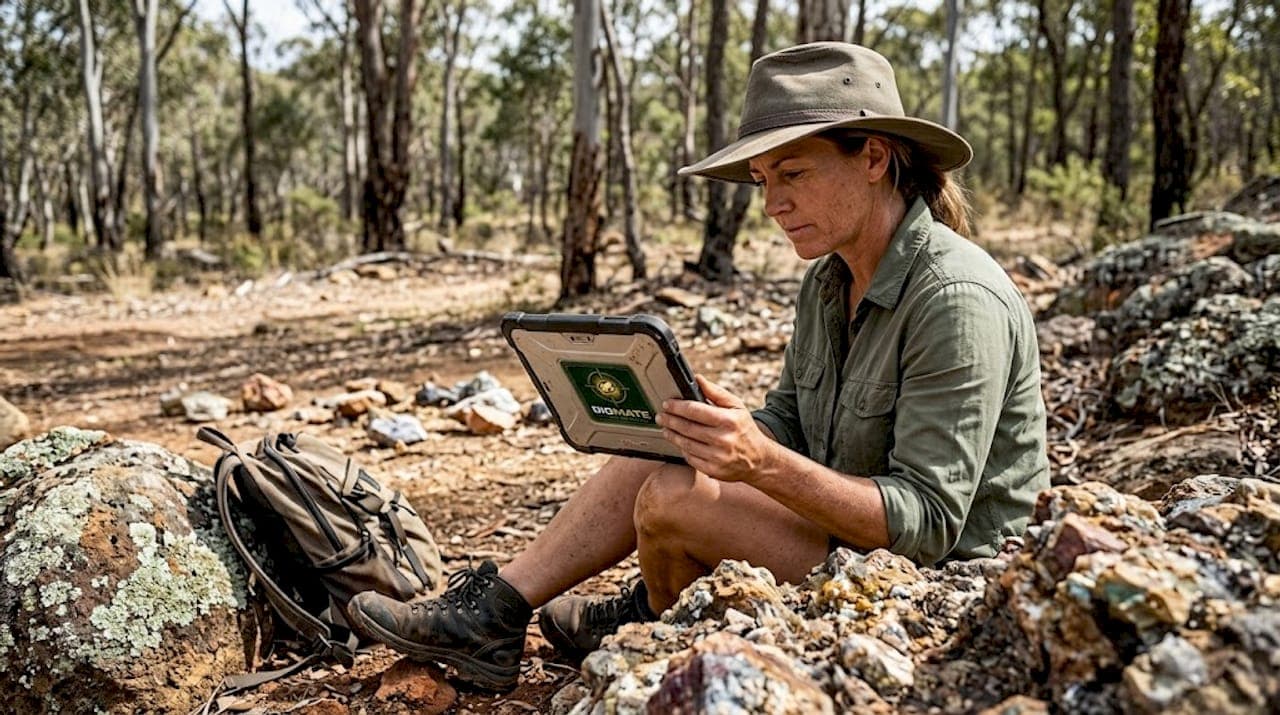
Many mining professionals and independent prospectors in New South Wales and Victoria assume a "prospecting companion" means bringing a partner into the field. That assumption is costing people time and money. A prospecting companion is typically a software or AI assistant built to support your prospecting workflow, not a physical person walking beside you. In the context of mineral exploration, this distinction reshapes how you plan sites, analyze geospatial data, and make decisions underground or in the bush. Understanding what these tools actually do, and how to choose the right one, is now a core skill for anyone serious about finding gold, gems, or other minerals across Australia's most productive regions.
Table of Contents
- What is a prospecting companion?
- How AI prospecting companions work
- Evaluating prospecting companions: what to look for
- Applying prospecting companions in the field
- A pragmatic take: what really matters in choosing your prospecting companion
- Unlock next-level prospecting with the right companion
- Frequently asked questions
Key Takeaways
| Point | Details |
|---|---|
| Not just a person | A prospecting companion is usually an AI-powered assistant, not a human or physical partner. |
| Focus on workflow fit | Choose tools that align with your real prospecting processes, not just marketing claims. |
| Field validation matters | Prioritize companions with proven effectiveness in NSW and Victoria's mineral environments. |
| Features should add value | Look for automation, guided steps, and data integration that save time and improve results. |
What is a prospecting companion?
With confusion around the term addressed, let's clarify exactly what a "prospecting companion" is and isn't.
At its simplest, a prospecting companion is a digital assistant designed to support and improve the prospecting process. In mineral exploration, that means software that helps you identify where to dig, integrates geological data, and guides your decision-making in real time. It is not a co-prospector, a field buddy, or a GPS device alone. It is an intelligent platform that processes information faster and more accurately than any manual method.
The confusion arises because the term "prospecting companion" means different things in different industries:
- Sales and marketing: AI tools that help sales reps find leads, prioritize outreach, and automate follow-ups
- Real estate: Digital assistants for agents to track property leads and manage pipelines
- Mineral exploration: AI and geospatial platforms that analyze terrain, geology, and historical data to surface high-probability sites
- General outdoor use: Basic apps for GPS waypoints and trail mapping, which are often mistaken for true AI companions
For mining professionals and prospectors in NSW and Victoria, the relevant definition is firmly in the third category. You need a tool that understands geology, not just coordinates.
"A prospecting companion is a digital assistant that surfaces the right opportunities at the right time, regardless of whether those opportunities are sales leads or mineral deposits."
Common misconceptions worth clearing up include the belief that any mapping app counts as a prospecting companion. It doesn't. A true companion integrates multiple data streams, learns from patterns, and actively guides your next move. Another misconception is that these tools replace your expertise. They don't. They amplify it.
Following mineral exploration best practices means pairing your field knowledge with data-driven insights. That combination is where a proper AI companion adds the most value. If you're curious about what a fully featured platform looks like in practice, the DigMate features overview shows how these capabilities come together for Australian prospectors.
How AI prospecting companions work
Once you understand what a prospecting companion is, it's important to see how modern AI solutions work in practice.
AI prospecting companions are built on a layered technology stack. At the foundation, you have geospatial data: satellite imagery, topographic maps, geological surveys, and historical mining records. On top of that sits the AI layer, which processes these inputs, identifies patterns, and generates prioritized recommendations. Workflow automation then ties it all together, pushing relevant insights to you at the right moment.
Here's how a typical AI companion operates step by step:
- Data ingestion: The system pulls in multiple data sources, including government geological surveys, remote sensing data, and known mineral occurrence records.
- Pattern recognition: AI algorithms analyze spatial relationships between known deposits and geological features to identify high-probability zones.
- Site prioritization: Results are ranked so you spend time in areas with the strongest indicators, not random ground.
- Guided workflow: The companion walks you through site assessment steps, flagging variables you might overlook manually.
- Continuous refinement: As you add field observations, the system updates its recommendations, getting smarter with each outing.
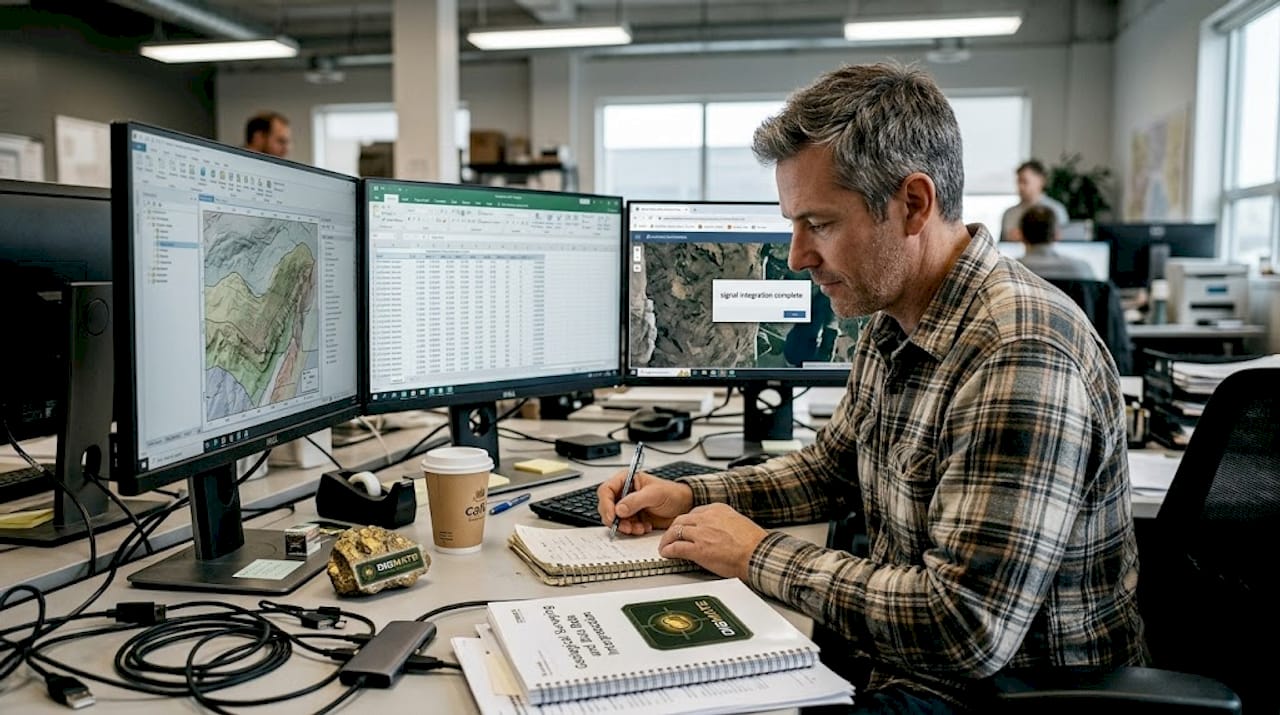
These tools reduce manual effort and use advanced signals and data integration to sharpen your targeting far beyond what spreadsheets or paper maps allow. AI companions can also automate prospector workflows, surfacing actionable signals that save hours of preparation before you even leave the truck.
| Feature | Manual methods | AI companion |
|---|---|---|
| Data sources | Limited, single-layer | Multi-source, integrated |
| Site prioritization | Experience-based | Algorithm-driven |
| Speed of analysis | Hours to days | Minutes |
| Error rate | Higher | Significantly lower |
| Field adaptability | Static maps | Real-time updates |
Pro Tip: Before your next field trip, load your AI companion with the most recent geological survey data for your target region. NSW and Victoria both have publicly available datasets that, when fed into a proper AI platform, dramatically sharpen site recommendations.
For a deeper look at how AI and geospatial tools are reshaping the way prospectors work, including real-world efficiency gains, the shift from intuition-only methods to data-supported decisions is well documented. Understanding AI digital prospecting outcomes gives you a clearer picture of what to expect from adoption.
Evaluating prospecting companions: what to look for
Understanding the technology is only half the battle; choosing the right companion for your prospecting needs is the next step.
Not all AI prospecting tools are built equally, and the marketing language around them is often bolder than the actual results. Here's how to cut through the noise and evaluate tools with a critical eye.
Key criteria to assess:
- Data integration: Does the tool connect with Australian geological databases, including Geoscience Australia records and state-level survey data from NSW and Victoria?
- Accuracy validation: Are there documented, field-tested results from regions comparable to where you prospect? Claims without evidence are red flags.
- Workflow fit: Mining professionals must map companion tools to their required workflows, such as lead discovery, prioritization, and guided site assessment.
- Ease of use in the field: A tool that requires a stable internet connection and a desktop computer is useless at a remote Victorian goldfield.
- Support and updates: Is the platform actively maintained? Geological datasets and AI models need regular updates to stay useful.
| Evaluation criterion | Strong tool | Weak tool |
|---|---|---|
| Data sources | Australian geological databases | Generic global datasets |
| Validation | Field-tested regional results | Marketing testimonials only |
| Offline capability | Yes | No |
| Workflow customization | High | Low |
| Update frequency | Regular | Infrequent |
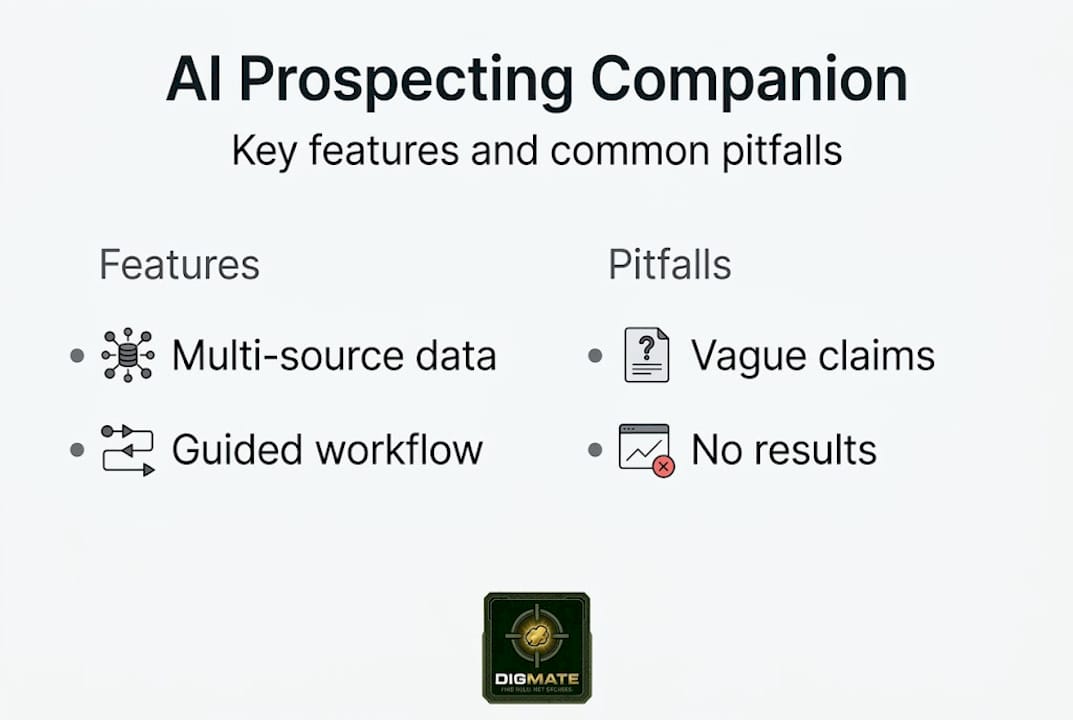
Red flags to watch for include vague claims about "industry-leading AI" with no supporting data, tools that can't explain their methodology, and platforms that have never been tested in Australian conditions.
Pro Tip: Request a trial period and use the companion on a site you already know well. If its recommendations align with your existing knowledge of that site, you have a strong signal that the underlying data and algorithms are sound.
Tools like prospecting site selection tools and resources covering geodata for prospecting are useful references when building your evaluation framework. The more you understand what quality data looks like, the faster you'll spot a tool that can't deliver.
Applying prospecting companions in the field
With an evaluation framework in place, let's see how prospecting companions come to life in active exploration.
Theory only gets you so far. Here's how a gold prospector in Victoria might actually use an AI companion across a full exploration sequence:
- Pre-trip planning: Load the platform with the target region's geological survey data and known gold occurrence records. The AI generates a prioritized list of zones based on bedrock type, fault lines, and historical finds.
- Site selection: Cross-reference AI recommendations with your own knowledge of the area. Flag two or three primary sites and one backup.
- Data integration on arrival: Input any visible surface indicators, such as quartz veining or ironstone, directly into the companion. The system recalibrates its confidence scores for each site.
- Real-time guidance: As you move through the site, the companion flags areas that match high-priority geological signatures identified in the pre-trip analysis.
- Post-field update: Upload your findings and field notes. The AI uses this data to refine future recommendations for the same region.
Prospecting companions fit into established mineral exploration methods like geophysics and remote sensing, rather than replacing them. They are designed to work alongside your existing techniques.
Common field scenarios where companions add clear value:
- Choosing between two geologically similar sites when time is limited
- Identifying subtle anomalies in terrain that manual review might miss
- Tracking cumulative field data across multiple trips to the same region
Customization matters enormously for NSW and Victoria prospectors. The goldfields of central Victoria behave differently from the geology around the Lachlan Fold Belt in NSW. A companion built on generic global data will underperform compared to one tuned to Australian regional geology.
For more targeted advice, mineral exploration tips specific to NSW and Victoria are worth reviewing alongside any AI tool you adopt. Pairing those insights with AI tools for detection gives you a complete picture of modern field-ready prospecting.
A pragmatic take: what really matters in choosing your prospecting companion
Here's an uncomfortable truth: most prospectors spend too much time comparing feature lists and not enough time asking whether a tool has actually worked in their backyard.
Feature checklists are easy to game. Any platform can claim AI-powered detection or advanced geospatial integration. What separates a genuinely useful companion from an expensive distraction is regional validation. Has it been tested in Victorian goldfields? Does it account for the specific geological signatures of NSW mineralizing systems? If the answer is unclear, that tells you everything.
We've seen prospectors adopt heavily marketed tools that performed beautifully in demos and delivered nothing in the field. The lesson isn't to distrust AI. It's to demand proof specific to your region and your workflow. Review proven prospecting outcomes before committing to any platform. Long-term success comes from tools that earn your trust through results, not branding.
Unlock next-level prospecting with the right companion
If you're ready to put these lessons into action, the right platform makes all the difference. DigMate is built specifically for prospectors and mining professionals working across New South Wales and Victoria, combining AI-driven mineral detection with geospatial mapping tools tuned to Australian geology.
Explore the full range of AI prospecting features designed to fit seamlessly into your existing workflow, from site prioritization to real-time field guidance. Not sure where to start? Grab the free gold map to see how data-driven prospecting looks in practice across your region. The DigMate app is your on-the-ground partner, built for serious prospectors who want results, not marketing promises.
Frequently asked questions
Is a prospecting companion a physical partner or a digital tool?
A prospecting companion is a digital or AI-powered software assistant, not a physical person. The term refers to platforms that support prospecting workflows through data analysis, site prioritization, and guided field decisions.
How does a prospecting companion improve mineral exploration?
These tools automate data discovery, improve targeting accuracy, and deliver guided workflows that save significant preparation time. Prospecting companion tools reduce manual effort and use smart signals for far better site targeting.
What features should I look for in a prospecting companion for gold exploration?
Prioritize AI platforms with proven data integration using Australian geological sources, field-tested results in NSW or Victoria, and workflows that match how you actually prospect. Validation over marketing is the standard that matters.
Are there risks in choosing the wrong companion tool?
Yes, picking hype-driven or unproven tools wastes time and leads to poor exploration decisions that cost real money. Emphasize real-world validation over brand recognition every time you evaluate a new platform.